<?xml version="1.0" encoding="utf-8"?><feed xmlns="http://www.w3.org/2005/Atom" ><generator uri="https://jekyllrb.com/" version="3.10.0">Jekyll</generator><link href="https://molina-abril.github.io/feed.xml" rel="self" type="application/atom+xml" /><link href="https://molina-abril.github.io/" rel="alternate" type="text/html" /><updated>2026-05-22T13:37:51+02:00</updated><id>https://molina-abril.github.io/feed.xml</id><title type="html">G. Molina-Abril</title><subtitle>Gines Molina-Abril&apos;s academic &amp; professional portfolio</subtitle><author><name>Gines Molina-Abril</name><email>ginesmoli@uoc.edu</email></author><entry><title type="html">More Than the Model: What I Actually Do as a Data-Driven Change Leader</title><link href="https://molina-abril.github.io/posts/2026/05/data-driven-change-leader-role/" rel="alternate" type="text/html" title="More Than the Model: What I Actually Do as a Data-Driven Change Leader" /><published>2026-05-21T00:00:00+02:00</published><updated>2026-05-21T00:00:00+02:00</updated><id>https://molina-abril.github.io/posts/2026/05/data-driven-change-leader-role</id><content type="html" xml:base="https://molina-abril.github.io/posts/2026/05/data-driven-change-leader-role/"><![CDATA[<p>When people ask what I do, the easy answer is “data and AI”. The honest answer is harder: I help organizations decide better.</p>

<p>That gap, between the tools and the decisions, is where my actual job lives.</p>

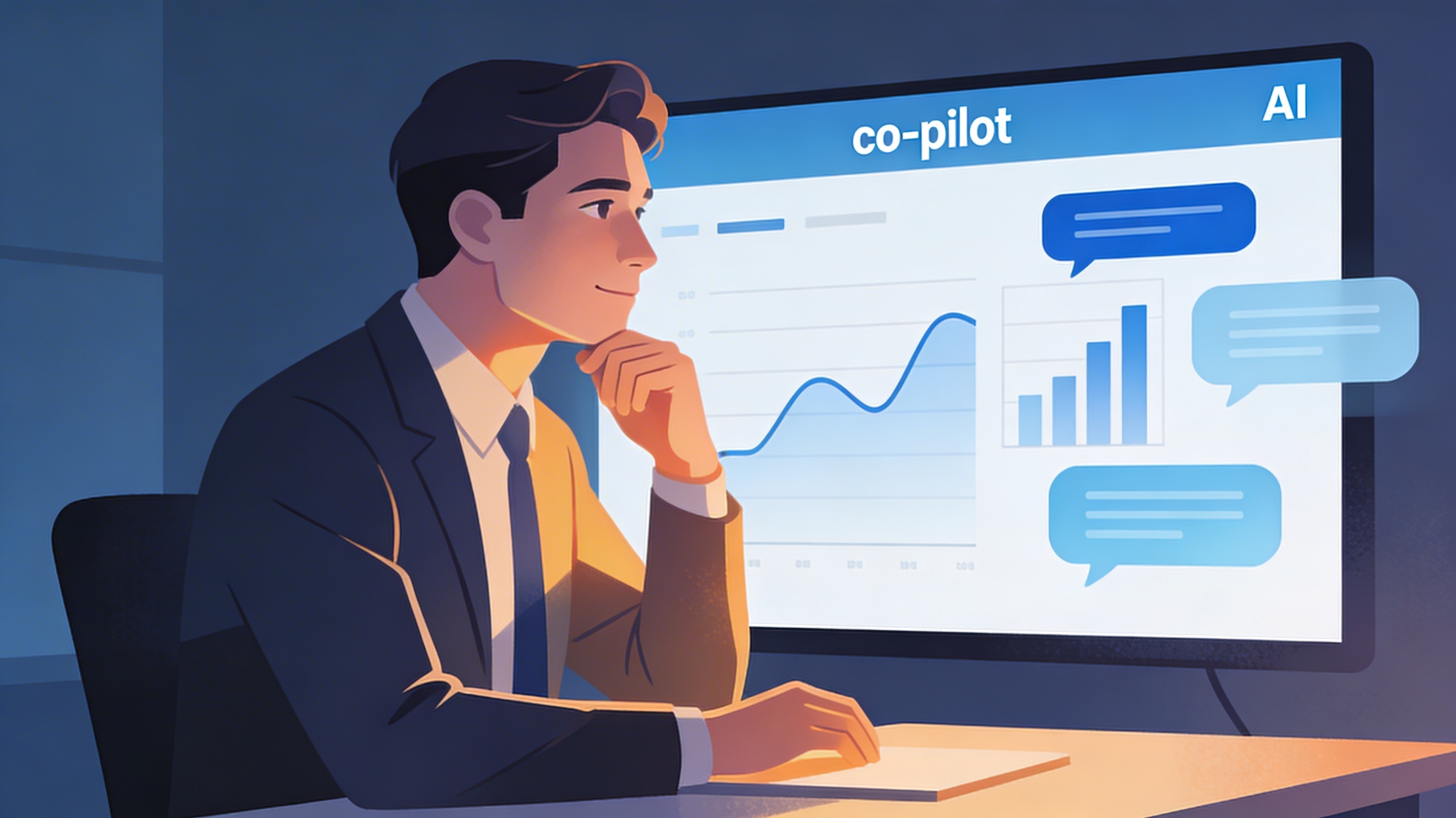
<p><img src="/images/generated-image.png" alt="A decision-maker working with AI as a co-pilot" /></p>

<p>Most people assume the role is technical: build the pipelines, train the models, ship the dashboards. I do that work. But I learned early that the hardest problems in a data-driven transformation are rarely technical. They’re human.</p>

<p>A model nobody trusts doesn’t get used. A dashboard that answers a question nobody asked just adds noise. And the smartest analytics in the world won’t help if business and engineering are speaking two different languages and quietly competing over who owns “the truth”.</p>

<p>So most of what I really do is <strong>translate between worlds</strong>.</p>

<p>Between business and engineering. Between analysts and executives. Between the company and its external partners, universities, and pilot clients. My job is to make data a shared meeting point, not a weapon of power.</p>

<p>In practice, that breaks down into a few roles I play at the same time:</p>

<ul>
  <li><strong>Interpreter</strong> between business language, analytical language, and the language of the board.</li>
  <li><strong>Designer</strong> of decision processes that are robust and don’t collapse when one key person leaves or one critical spreadsheet breaks.</li>
  <li><strong>Cultural facilitator</strong> who names the real resistance, the fears, the incentives, the inherited habits, instead of pretending change is purely rational.</li>
  <li><strong>Alliance builder</strong>, inside and outside the organization.</li>
  <li><strong>Ethical and methodological reference</strong> for using AI to support decisions, not to replace human judgment.</li>
</ul>

<p>I also try to resist the urge to treat change as a closed project with a finish line. In SMEs especially, the environment is volatile, uncertain, and frankly hard to fully understand. So I treat change as an adaptive capability: decide, learn, adjust, repeat. Build resilience, not just tools.</p>

<p>The shift I care about most is cultural: moving teams from “give me a dashboard” to “what decision are we actually trying to improve?”. Before we build anything, I want us to be able to answer three questions, which business problem are we solving, who owns the decision, and what behavior should change. If we can’t answer those, more technology will only make us faster at being confused.</p>

<p>And here’s how I measure whether any of it worked. Not by the number of models or dashboards we shipped. By whether decisions became clearer, more consistent, and more connected to real outcomes. By whether the organization depends less on heroes and fragile files, and more on a shared language and traceable logic.</p>

<p>That’s the role. Not having more technology than the company next door, but building the capability to ask better questions, decide better, and learn faster, without losing human judgment along the way.</p>

<p>The model is the easy part. The culture is the work.</p>

<p>#ChangeManagement #DataDrivenCulture #StrategicDecisionMaking #Leadership #ArtificialIntelligence #SMEs #DataGovernance #DigitalTransformation</p>]]></content><author><name>Gines Molina-Abril</name><email>ginesmoli@uoc.edu</email></author><category term="change management" /><category term="data-driven culture" /><category term="strategic decision-making" /><category term="leadership" /><category term="artificial intelligence" /><category term="SMEs" /><category term="data governance" /><category term="digital transformation" /><summary type="html"><![CDATA[When people ask what I do, the easy answer is “data and AI”. The honest answer is harder: I help organizations decide better.]]></summary></entry><entry><title type="html">AI and the Democratization of Decision-Making</title><link href="https://molina-abril.github.io/posts/2026/05/ai-democratization-decision-making/" rel="alternate" type="text/html" title="AI and the Democratization of Decision-Making" /><published>2026-05-03T00:00:00+02:00</published><updated>2026-05-03T00:00:00+02:00</updated><id>https://molina-abril.github.io/posts/2026/05/ai-democratization-decision-making</id><content type="html" xml:base="https://molina-abril.github.io/posts/2026/05/ai-democratization-decision-making/"><![CDATA[<p>AI may become the greatest democratization of decision-making in modern history, if we do not misuse it first.</p>

<p>I feel genuinely lucky to be alive at this moment. Not because AI is impressive, though it is, but because of what it could represent for human freedom, creativity, and agency.</p>

<p>History offers an interesting parallel through music.</p>

<p><img src="/images/beethoven.png" alt="Beethoven" /></p>

<p>Beethoven helped redefine the composer from a servant of patronage into an autonomous creator. He challenged the structures of his time, famously declaring:</p>

<blockquote>
  <p>“Prince, what you are, you are by chance and birth. What I am, I am through myself.”</p>
</blockquote>

<p>His rebellion was artistic, but also cultural: a statement that creation should not belong only to institutions, elites, or inherited power.</p>

<p>Then recording technology changed everything.</p>

<p>From Edison’s phonograph to radio, records, and eventually streaming, music escaped the concert hall. It no longer required wealth, status, or privileged access. What once moved hundreds could now move millions. Music became democratic, accessible, intimate, and deeply human.</p>

<p>Not because any single inventor planned it that way, but because technological progress compounded with cultural change.</p>

<p>I think AI stands at a similar inflection point.</p>

<p>For decades, strategic sophistication was reserved for organizations with analysts, consultants, and deep pockets. The ability to process information at scale, test scenarios, and support complex decisions was largely concentrated in the hands of a few.</p>

<p>AI changes that equation.</p>

<p>For the first time, a freelancer, a researcher, or a small business owner can access capabilities that once required entire teams. Strategic intelligence is becoming infrastructure.</p>

<p>That is extraordinary.</p>

<p>But capability is not the same as freedom.</p>

<p>AI can expand human agency, or quietly erode it if we outsource judgment to systems we barely interrogate, confuse generated answers with genuine understanding, or mistake speed for progress.</p>

<p>That is why the most valuable skills today are becoming deeply human ones: critical thinking, analytical debate, clarity of purpose, and intellectual honesty.</p>

<p>Not soft skills. Survival skills.</p>

<p>This is exactly what I am exploring in my PhD: how AI can help SMEs and individuals make smarter decisions, not just faster ones.</p>

<p>What makes this moment rare is that strategic decision-making itself is becoming accessible at scale.</p>

<p>The real question is no longer what AI can do.</p>

<p>It is who it will empower.</p>

<p>#ArtificialIntelligence #AI #StrategicDecisionMaking #HumanCentricAI #Innovation #CriticalThinking #Leadership #Entrepreneurship #SMEs #DigitalTransformation</p>]]></content><author><name>Gines Molina-Abril</name><email>ginesmoli@uoc.edu</email></author><category term="artificial intelligence" /><category term="strategic decision-making" /><category term="human agency" /><category term="critical thinking" /><category term="leadership" /><category term="entrepreneurship" /><category term="SMEs" /><category term="digital transformation" /><summary type="html"><![CDATA[AI may become the greatest democratization of decision-making in modern history, if we do not misuse it first.]]></summary></entry><entry><title type="html">The Monkeys, the Ladder, and the Real Challenge of AI Adoption</title><link href="https://molina-abril.github.io/posts/2026/04/monkeys-bananas-culture-ai/" rel="alternate" type="text/html" title="The Monkeys, the Ladder, and the Real Challenge of AI Adoption" /><published>2026-04-12T00:00:00+02:00</published><updated>2026-04-12T00:00:00+02:00</updated><id>https://molina-abril.github.io/posts/2026/04/monkeys-bananas-culture-ai</id><content type="html" xml:base="https://molina-abril.github.io/posts/2026/04/monkeys-bananas-culture-ai/"><![CDATA[<p>There’s a classic experiment about monkeys and bananas that I keep coming back to lately.</p>

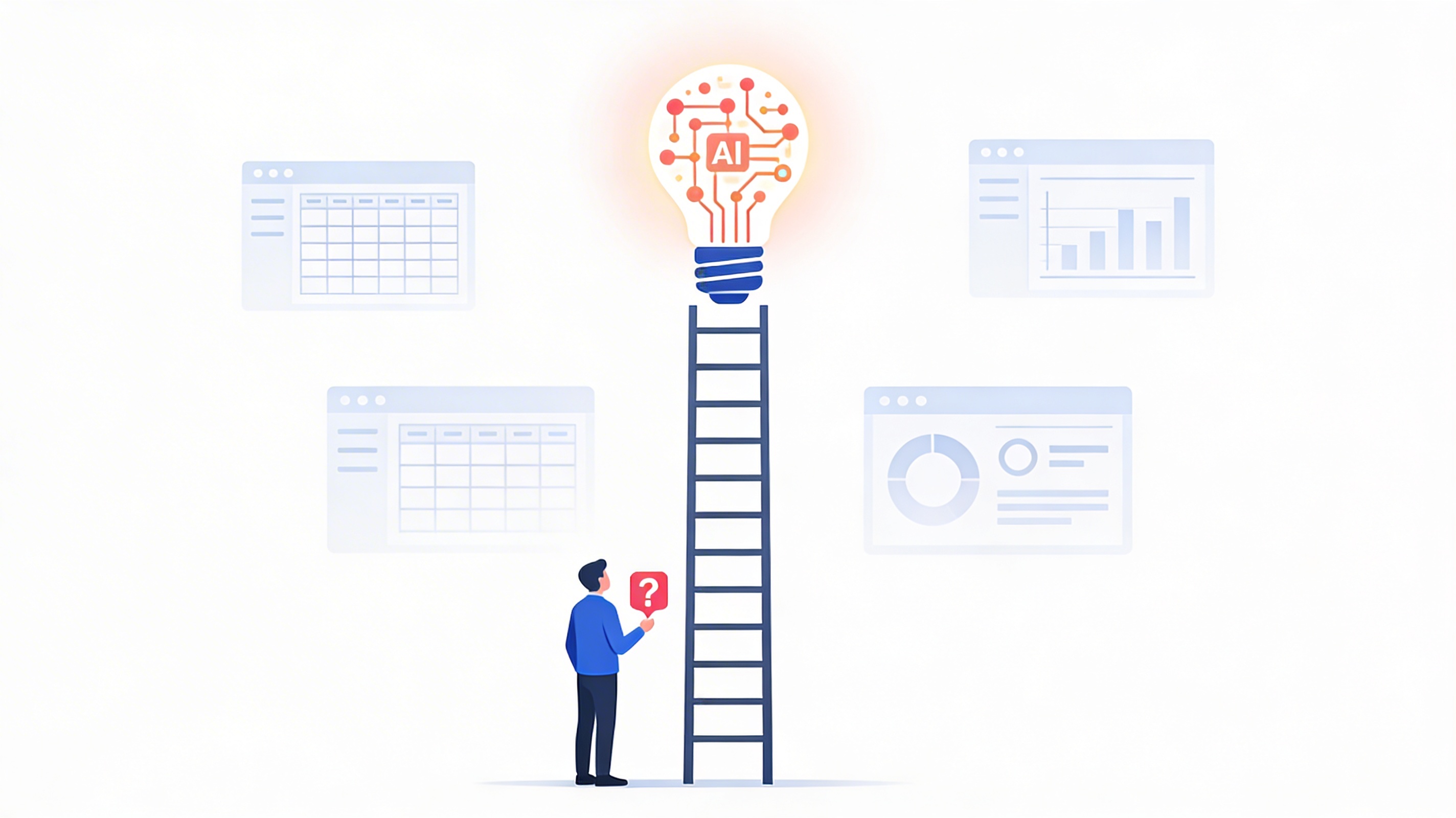
<p><img src="/images/generated-image-2.png" alt="The monkeys, the ladder, and AI adoption" /></p>

<p>You put bananas at the top of a ladder. Every time a monkey climbs, the whole group gets punished. Eventually, no monkey tries. When you replace them one by one with new monkeys who have never received a single punishment, they still don’t climb, because that’s just how things are done here.</p>

<p>Sound familiar?</p>

<p><strong>Version 1: the Excel era.</strong> Every team had their own files, their own formulas, their own logic. One or two people “owned” the numbers and nobody dared touch a cell. Questioning that setup felt like a threat. So nobody did.</p>

<p><strong>Version 2: the dashboard-for-everything era.</strong> We modernized. We moved fast, built dashboards for everything. But here’s the thing: we changed the tool, not the pattern. People were still not asking why. They just wanted a chart. Whether it drove a better decision or not was secondary.</p>

<p><strong>Version 3: where I think we actually need to get to.</strong> Before building anything, stop and ask: what decision are we trying to make? What changes in the real world if we have this data clearly? That shift from “give me a dashboard” to “let’s figure out what we’re actually solving” sounds small. It isn’t.</p>

<p>Now I see the same thing happening with AI.</p>

<p>Companies are rushing to “add AI” everywhere. And honestly, most of the time the cultural muscle behind it hasn’t been built. The same unquestioned habits, the same inherited workflows, now just with a model on top.</p>

<p>The organizations that will actually benefit from AI aren’t necessarily the ones with the most tools or the biggest budgets. They’re the ones willing to ask uncomfortable questions about why they do things the way they do. That’s the cultural work. And it’s harder than any technical implementation.</p>

<p>Technology only creates real impact when the culture moves with it.</p>

<p>I don’t think this is unique to data or AI. In most organizations, you’ll hear some version of “we’ve always done it this way.” Sometimes that reflects hard-earned experience. Other times, it’s just the monkeys not climbing the ladder anymore.</p>

<p>The question worth asking isn’t what tool to adopt next. It’s whether your organization has built the habit of questioning its own assumptions before the context forces it to.</p>

<p>#ChangeManagement #DataCulture #AIAdoption #OrganizationalCulture #Leadership #DataDrivenDecisions</p>]]></content><author><name>Gines Molina-Abril</name><email>ginesmoli@uoc.edu</email></author><category term="change management" /><category term="data culture" /><category term="AI adoption" /><category term="organizational culture" /><category term="leadership" /><category term="data-driven decisions" /><summary type="html"><![CDATA[There’s a classic experiment about monkeys and bananas that I keep coming back to lately.]]></summary></entry><entry><title type="html">Something Big Is Happening: AI, Burnout, and the Future of Work</title><link href="https://molina-abril.github.io/posts/2026/03/something-big/" rel="alternate" type="text/html" title="Something Big Is Happening: AI, Burnout, and the Future of Work" /><published>2026-03-17T00:00:00+01:00</published><updated>2026-03-17T00:00:00+01:00</updated><id>https://molina-abril.github.io/posts/2026/03/something-big</id><content type="html" xml:base="https://molina-abril.github.io/posts/2026/03/something-big/"><![CDATA[<p>AI is transforming work in profound ways, but not in a single, linear direction. On one side, reports like the World Economic Forum’s “Four Futures for Jobs in the New Economy” and McKinsey’s estimates of up to 15–30% of hours that could be automated by 2030 show that displacement and job churn are likely, even if new roles are created in parallel <a href="#ref-3">[3]</a><a href="#ref-4">[4]</a>. At the same time, early labour‑market data from the Yale Budget Lab suggests that, so far, the overall impact on employment levels is still relatively modest and more evolutionary than catastrophic, which reminds us that a lot depends on how quickly workers and institutions adapt <a href="#ref-5">[5]</a>.</p>

<p><img src="/images/generated-image.png" alt="AI, burnout and future of work" /></p>

<p>However, what really concerns me is not only whether jobs disappear, but how AI is being integrated into the day‑to‑day reality of those who keep their jobs. The UC Berkeley study reported in Fortune shows that AI tools can significantly boost output and expand the range of tasks people can handle, but this often comes at the cost of breaks, boundaries and, eventually, well‑being. Workers describe using AI to fill every gap in their schedule, leading to cognitive fatigue and a blurring of work–life limits rather than the promised “work less for the same results” <a href="#ref-1">[1]</a>.</p>

<p>In parallel, voices like Matt Shumer describe how, for some knowledge workers, AI is already capable of doing entire workflows end‑to‑end, “better than they would have done themselves”, which creates a new kind of psychological pressure: if the system can do the work, what is left for the human, beyond supervising or validating? His viral essay captures both the excitement and the anxiety of realizing that, if your job happens on a screen, AI is coming for a significant part of it much sooner than many expected. That mix of acceleration and uncertainty is precisely what can fuel the burnout dynamics seen in the Berkeley research <a href="#ref-1">[1]</a><a href="#ref-2">[2]</a>.</p>

<p>Personally, I don’t want AI just to make us do more things faster; I want AI to help us think better. The more strategic scenarios outlined by the World Economic Forum, like the “co‑pilot economy”, explicitly assume a model where AI augments human judgment rather than replacing it, but they also warn that this depends on serious investment in skills, governance and social protections <a href="#ref-4">[4]</a>. For me, a “humanized AI” is one that creates space for reflection, learning and creativity, instead of compressing every minute of our attention into yet another task.</p>

<p>This is why I see the real challenge not only in the technology itself, but in the choices we make around it as professionals, leaders and policymakers. Every decision about how we deploy AI in organizations has consequences for workers’ skills, autonomy and mental health, and we are still far from fully understanding or measuring those effects.</p>

<p>That is also why, in my case, I am drawn to studying this topic in depth in my thesis: I would like to quantify, as rigorously as possible, how AI adoption changes productivity, burnout and decision quality in real workplaces. If we manage to build and govern AI in a way that truly supports human judgment, rather than replacing or overloading it, while challenging us to think better, learn continuously, and improve our decisions, then the “future of work” can be more than a slogan. It can become a future where technology and people actually make each other better.</p>

<p>References:</p>

<p><span id="ref-1">1</span> - Fortune (2026, 10 February). <em>In the workforce, AI is having the opposite effect it was supposed to, UC Berkeley researchers warn.</em> <a href="https://fortune.com/2026/02/10/ai-workforce-productivity-burnout-uc-berkeley-research/">https://fortune.com/2026/02/10/ai-workforce-productivity-burnout-uc-berkeley-research/</a></p>

<p><span id="ref-2">2</span> - Shumer, M. (2026, 9 January). <em>Something big is happening</em>. X (formerly Twitter). <a href="https://x.com/mattshumer_/status/2021256989876109403">https://x.com/mattshumer_/status/2021256989876109403</a></p>

<p><span id="ref-3">3</span> - McKinsey Global Institute. (2017). <em>Jobs lost, jobs gained: What the future of work will mean for jobs, skills, and wages.</em> McKinsey &amp; Company. <a href="https://www.mckinsey.com/featured-insights/future-of-work/jobs-lost-jobs-gained-what-the-future-of-work-will-mean-for-jobs-skills-and-wages">https://www.mckinsey.com/featured-insights/future-of-work/jobs-lost-jobs-gained-what-the-future-of-work-will-mean-for-jobs-skills-and-wages</a></p>

<p><span id="ref-4">4</span> - World Economic Forum. (2025). <em>Four futures for jobs in the new economy: AI and talent in 2030.</em> <a href="https://www.weforum.org/publications/four-futures-for-jobs-in-the-new-economy-ai-and-talent-in-2030/">https://www.weforum.org/publications/four-futures-for-jobs-in-the-new-economy-ai-and-talent-in-2030/</a></p>

<p><span id="ref-5">5</span> - The Budget Lab at Yale. (2026, 27 January). <em>Evaluating the impact of AI on the labor market: Current state of affairs (November–December CPS update).</em> Yale University. <a href="https://budgetlab.yale.edu/research/evaluating-impact-ai-labor-market-novemberdecember-cps-update">https://budgetlab.yale.edu/research/evaluating-impact-ai-labor-market-novemberdecember-cps-update</a></p>]]></content><author><name>Gines Molina-Abril</name><email>ginesmoli@uoc.edu</email></author><category term="AI" /><category term="future of work" /><category term="automation" /><category term="labor market" /><category term="productivity" /><category term="burnout" /><category term="decision-making" /><category term="human-centered AI" /><category term="workplace well-being" /><summary type="html"><![CDATA[AI is transforming work in profound ways, but not in a single, linear direction. On one side, reports like the World Economic Forum’s “Four Futures for Jobs in the New Economy” and McKinsey’s estimates of up to 15–30% of hours that could be automated by 2030 show that displacement and job churn are likely, even if new roles are created in parallel [3][4]. At the same time, early labour‑market data from the Yale Budget Lab suggests that, so far, the overall impact on employment levels is still relatively modest and more evolutionary than catastrophic, which reminds us that a lot depends on how quickly workers and institutions adapt [5].]]></summary></entry><entry><title type="html">What is your motivation to do research?</title><link href="https://molina-abril.github.io/posts/2025/12/motivation/" rel="alternate" type="text/html" title="What is your motivation to do research?" /><published>2025-12-07T00:00:00+01:00</published><updated>2025-12-07T00:00:00+01:00</updated><id>https://molina-abril.github.io/posts/2025/12/motivation</id><content type="html" xml:base="https://molina-abril.github.io/posts/2025/12/motivation/"><![CDATA[<p>I have asked myself this question many times, and it often arises when things become difficult. Especially when dealing with the less pleasant aspects of academia, such as hierarchies, informal power structures, politics, and the notion that status and influence sometimes take precedence over the quality or purpose of the work. I understand why this system exists and how it historically helped to assign credit and recognise contributions, but I do not fully identify with many of the practices that have become normalised. I am also not motivated by research whose primary goal is simply to be published. What really matters to me is the purpose of science, how research is conducted, and what each study is ultimately meant to contribute.</p>

<p>My primary motivation for conducting research is to create knowledge that genuinely adds value and has clear potential for application in the real world. I do not see myself researching something with little practical relevance or without a clear intention to improve people’s lives. This perspective comes from my background. I grew up in a working, middle-class family of entrepreneurs in a modest town. I have seen how economic conditions and globalisation have changed the way families earn a living. Although many things have improved, I often feel that we are increasingly dependent on work over which we have very little control. For me, freedom is not about avoiding responsibility, but about being able to build a livelihood through your own decisions and seeing those decisions create real change for yourself and your family.</p>

<p>This is why my research is strongly oriented toward small and medium-sized enterprises and entrepreneurs. SMEs sustain the productive fabric of many countries, yet they compete under very different conditions than large corporations. They face barriers such as limited resources, lack of time, financial constraints, and restricted access to advanced technologies or specialised teams. Many simply cannot afford a dedicated data professional to help them navigate an increasingly complex and rapidly changing environment. My goal is to help make modern, data-driven and AI-based decision tools accessible to these organisations, so they can become more competitive and gain greater control over their future.</p>

<p>This purpose naturally leads me to focus on long-term decision-making. Understanding and measuring impact over time is extremely difficult, especially in business contexts. We rarely know the real consequences of our decisions until much later, if ever. Bringing more structure and clarity to long-term reasoning, which has traditionally been studied in fields such as logistics and finance, could be highly valuable not only for companies but also at a personal level. I believe that improving how we think about long-term decisions can have a meaningful impact that extends beyond organisations and into everyday life.</p>

<p>Another strong motivation for me is the desire to learn. In professional environments, it is easy to fall into routine, operate on autopilot, and slowly stop challenging yourself. Research is a conscious choice to avoid that. I want to continue learning deeply, refining my technical and analytical skills, and developing ways of thinking that are difficult to acquire outside of academic research. I am convinced that the skills developed through research have a lasting impact on both my professional path and my personal growth.</p>

<p>I am also genuinely passionate about my topic. I am deeply interested in data science applied to organisations, as well as the psychological and philosophical aspects of how humans interact with these technologies. In my professional experience, I often see projects fail not because of a lack of technology, but because of a gap between technical solutions and real human decision-making. Closing that gap means fewer wasted opportunities and, ultimately, more freedom for individuals and organisations.</p>

<p>Finally, I truly enjoy discussing ideas and explaining complex concepts to non-technical audiences. This has motivated me to work on improving my communication skills and to become more effective at translating theory into practical applications. I have found real satisfaction in applying these tools, sharing my journey, and hopefully inspiring others to seek more autonomy, meaningful work, and the best version of themselves through knowledge and thoughtful decision-making.</p>]]></content><author><name>Gines Molina-Abril</name><email>ginesmoli@uoc.edu</email></author><category term="research" /><category term="motivation" /><category term="SMEs" /><category term="decision-making" /><category term="AI" /><category term="professional development" /><summary type="html"><![CDATA[I have asked myself this question many times, and it often arises when things become difficult. Especially when dealing with the less pleasant aspects of academia, such as hierarchies, informal power structures, politics, and the notion that status and influence sometimes take precedence over the quality or purpose of the work. I understand why this system exists and how it historically helped to assign credit and recognise contributions, but I do not fully identify with many of the practices that have become normalised. I am also not motivated by research whose primary goal is simply to be published. What really matters to me is the purpose of science, how research is conducted, and what each study is ultimately meant to contribute.]]></summary></entry><entry><title type="html">Exploring Evaluative AI for SME Strategic Decision-Making at IDEAL 2025</title><link href="https://molina-abril.github.io/posts/2025/11/ideal2025presentation/" rel="alternate" type="text/html" title="Exploring Evaluative AI for SME Strategic Decision-Making at IDEAL 2025" /><published>2025-11-08T00:00:00+01:00</published><updated>2025-11-08T00:00:00+01:00</updated><id>https://molina-abril.github.io/posts/2025/11/ideal2025presentation</id><content type="html" xml:base="https://molina-abril.github.io/posts/2025/11/ideal2025presentation/"><![CDATA[<p>Next week, I will be presenting my <a href="https://link.springer.com/content/pdf/10.1007/978-3-032-10486-1_34.pdf">latest research</a> at the 26th International Conference on Intelligent Data Engineering and Automated Learning (<strong><a href="https://ideal2025.ujaen.es/">IDEAL 2025</a></strong>) in Jaén, one of Europe’s leading conferences on intelligent systems, learning technologies, and AI in practice. The event gathers academics, industry professionals, and practitioners to discuss innovations in AI, machine learning, and decision support systems, making it an IDEAL platform to share applied research in emerging AI methodologies.</p>

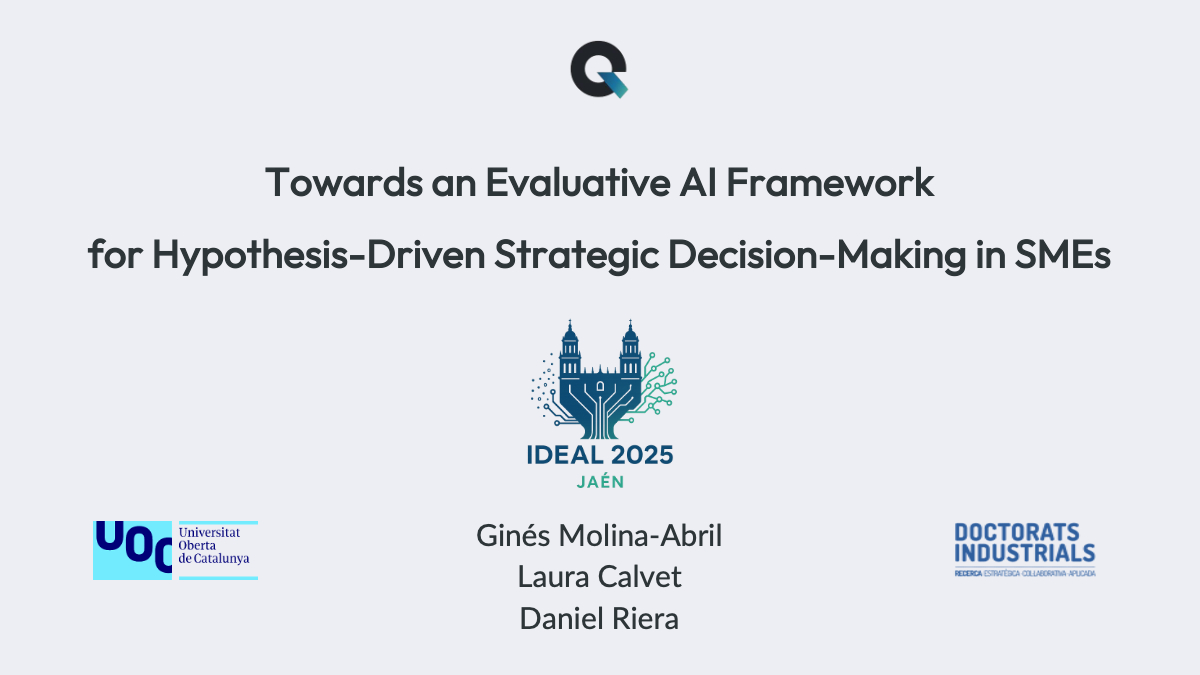
<p><img src="/images/ideal2025presentationslide.png" alt="IDEAL 2025 Presentation" /></p>

<p>In my session, I will present an approach based on the <strong>Evaluative AI paradigm</strong>, where AI not only provides recommendations after a decision is made but also actively assists humans throughout the <strong>decision-making process</strong>. This involves:</p>

<ul>
  <li><strong>Evidence-based co-reasoning:</strong> AI supports human decision-makers in evaluating data and evidence.</li>
  <li><strong>Hypothesis testing:</strong> AI assists in exploring strategic options through scenario analysis.</li>
  <li><strong>Context-aware reasoning:</strong> AI provides decision support that considers organizational context, constraints, and objectives.</li>
</ul>

<p>The ultimate goal is simple but ambitious: to make <strong>responsible, transparent, and participatory decision intelligence feasible for small and medium-sized enterprises (SMEs)</strong>, without requiring huge budgets or complex infrastructures.</p>

<p>This research is being conducted as part of my <strong>Industrial PhD at the Universitat Oberta de Catalunya (UOC)</strong> within the <strong>Doctorats Industrials program of the Generalitat de Catalunya</strong>, following the <strong>Design and Creation methodology (Oates, 2006)</strong>. This approach emphasizes creating solutions that are grounded in real-world practice while maintaining strong theoretical foundations, bridging the gap between academic research and industrial application.</p>

<h3 id="links-and-resources">Links and resources</h3>

<ul>
  <li><strong>Article:</strong> The full paper is available in the <strong>IDEAL 2025 proceedings</strong> via Springer <a href="https://link.springer.com/content/pdf/10.1007/978-3-032-10486-1_34.pdf?pdf=inline%20link">here</a></li>
</ul>

<p>If you are attending IDEAL 2025, I would love to connect in person and discuss how Evaluative AI can be applied in SMEs to enhance strategic decision-making.</p>]]></content><author><name>Gines Molina-Abril</name><email>ginesmoli@uoc.edu</email></author><category term="AI" /><category term="SMEs" /><category term="conferences" /><category term="IDEAL2025" /><category term="strategic decision-making" /><summary type="html"><![CDATA[Next week, I will be presenting my latest research at the 26th International Conference on Intelligent Data Engineering and Automated Learning (IDEAL 2025) in Jaén, one of Europe’s leading conferences on intelligent systems, learning technologies, and AI in practice. The event gathers academics, industry professionals, and practitioners to discuss innovations in AI, machine learning, and decision support systems, making it an IDEAL platform to share applied research in emerging AI methodologies.]]></summary></entry><entry><title type="html">Welcome to My Portfolio: Expectations and Vision</title><link href="https://molina-abril.github.io/posts/2025/10/welcome/" rel="alternate" type="text/html" title="Welcome to My Portfolio: Expectations and Vision" /><published>2025-10-24T00:00:00+02:00</published><updated>2025-10-24T00:00:00+02:00</updated><id>https://molina-abril.github.io/posts/2025/10/welcome</id><content type="html" xml:base="https://molina-abril.github.io/posts/2025/10/welcome/"><![CDATA[<p>I’m excited to launch this portfolio website as a space to document and share my journey at the intersection of data engineering, research, and strategic decision-making for SMEs.</p>

<h2 id="why-this-portfolio">Why This Portfolio?</h2>

<p>Over the years, I’ve worked across multiple domains—fintech, e-learning, media—and accumulated experiences that span technical implementation, academic research, and community building. This portfolio serves several purposes:</p>

<p><strong>Professional visibility</strong>: I want to showcase the breadth and depth of my work to potential collaborators, employers, and research partners. From building scalable data platforms to conducting industrial PhD research on strategic optimization, this site provides a comprehensive view of what I bring to the table.</p>

<p><strong>Knowledge sharing</strong>: I believe in contributing to the broader technical and academic communities. Through this platform, I can share insights from my research, document lessons learned from real-world projects, and provide guidance to students and early-career professionals navigating similar paths.</p>

<p><strong>Personal reflection</strong>: Documenting my work helps me reflect on my growth, identify patterns in my interests and strengths, and set clearer goals for the future. It’s a living record of my evolution as an engineer, researcher, and leader.</p>

<h2 id="what-youll-find-here">What You’ll Find Here</h2>

<ul>
  <li><strong>Research &amp; Publications</strong>: My academic work on strategic decision-making, data-driven optimization, and evaluative AI for SMEs, including conference papers and ongoing PhD research.</li>
  <li><strong>Talks &amp; Presentations</strong>: Technical and business-oriented talks I’ve delivered at conferences, universities, and industry events—covering topics from data engineering to electric vehicle logistics optimization.</li>
  <li><strong>Initiatives</strong>: Community-building efforts like TechClub UPCT, EncuentraSport, and my participation in Microsoft Student Partner, showcasing my commitment to fostering collaborative learning environments.</li>
  <li><strong>Blog Posts</strong>: Reflections on technical challenges, insights from research, and perspectives on data-driven innovation and strategic thinking.</li>
</ul>

<h2 id="my-expectations">My Expectations</h2>

<p>I hope this portfolio becomes a bridge—connecting my past experiences with future opportunities, linking academic rigor with practical impact, and joining diverse communities of practitioners and researchers who share similar interests.</p>

<p>I also expect this site to evolve. As my research progresses, as I take on new challenges, and as I continue learning, this portfolio will grow and adapt. It’s not a static resume—it’s a dynamic representation of my work and thinking.</p>

<h2 id="lets-connect">Let’s Connect</h2>

<p>If you’re working on similar problems—whether in data engineering, operational research, strategic decision-making, or SME innovation—I’d love to hear from you. Feel free to reach out via email or connect with me on LinkedIn.</p>

<p>Thank you for visiting, and I look forward to sharing this journey with you.</p>]]></content><author><name>Gines Molina-Abril</name><email>ginesmoli@uoc.edu</email></author><category term="portfolio" /><category term="professional development" /><category term="career" /><category term="research" /><summary type="html"><![CDATA[I’m excited to launch this portfolio website as a space to document and share my journey at the intersection of data engineering, research, and strategic decision-making for SMEs.]]></summary></entry></feed>