
Evaluative AI Framework for Strategic Decision-Making in SMEs - IDEAL 2025
Date:
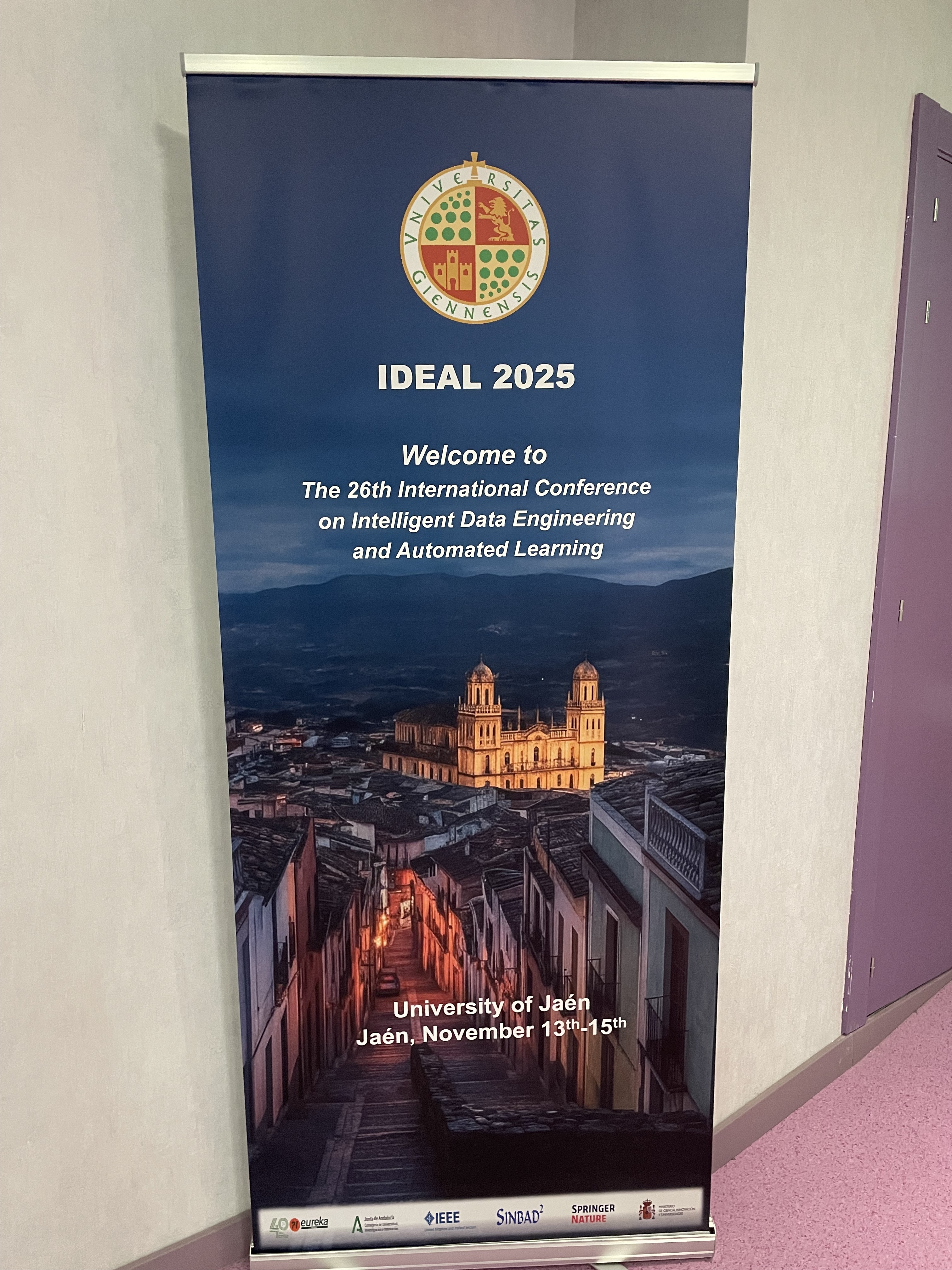
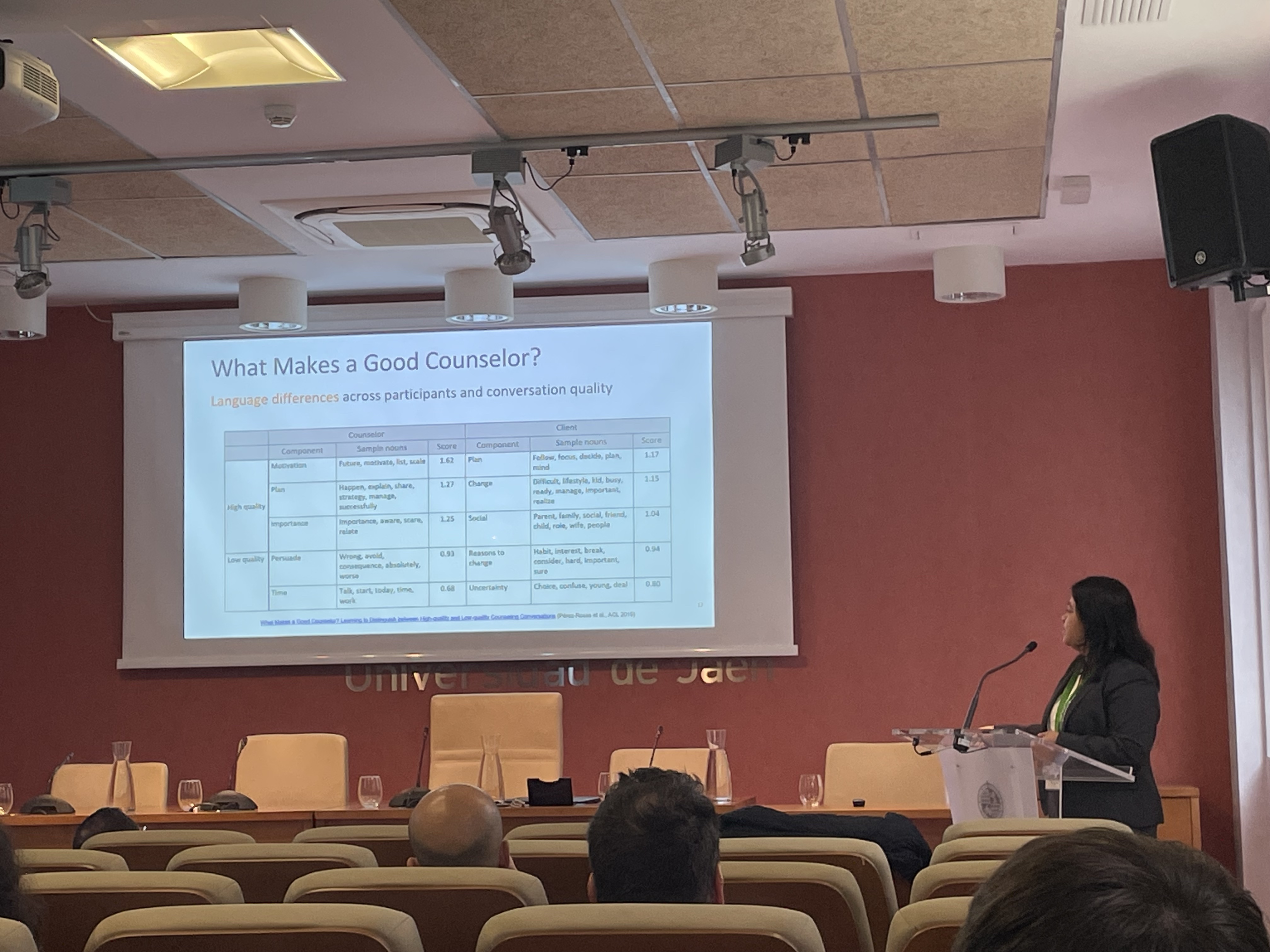
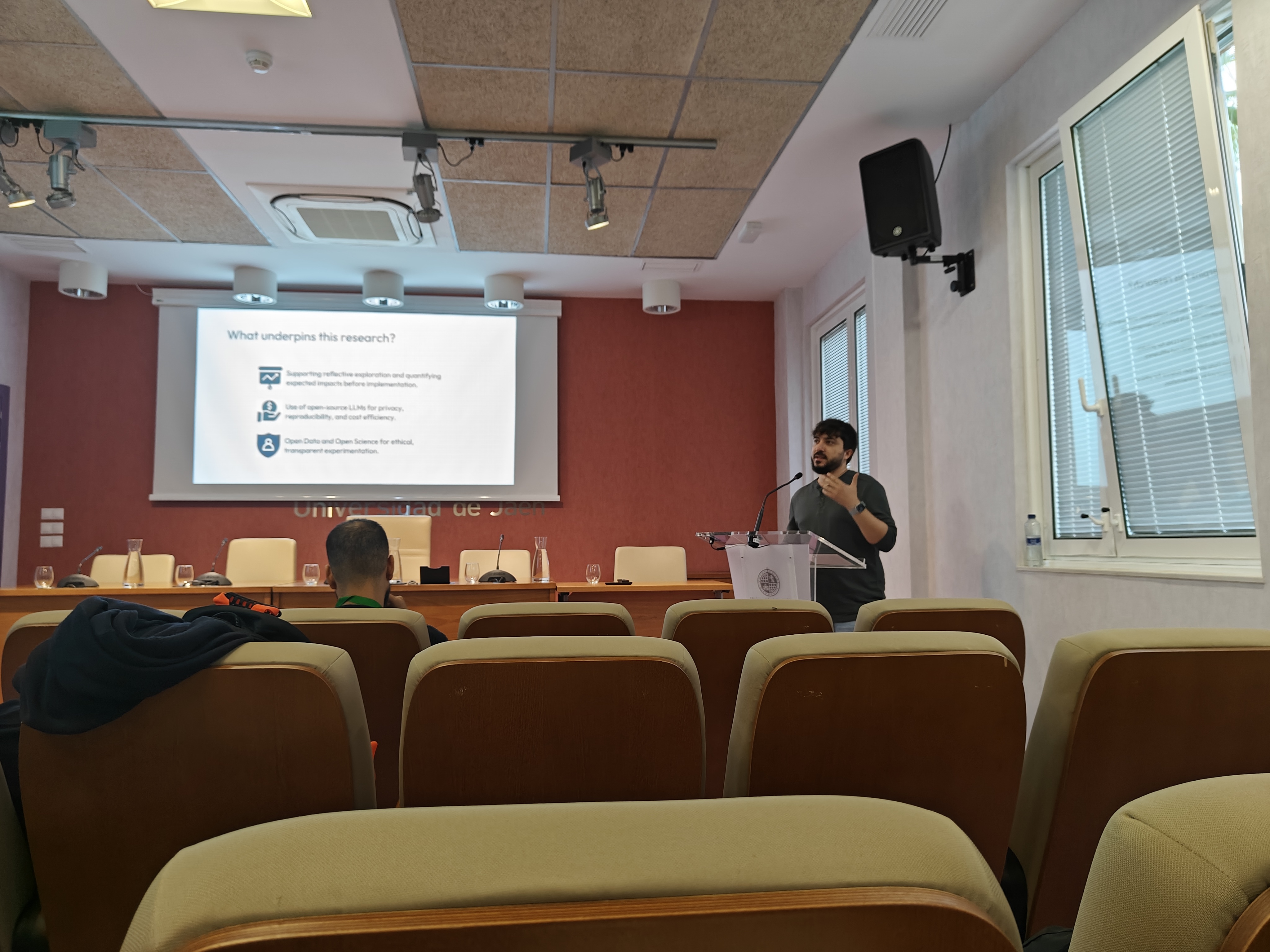
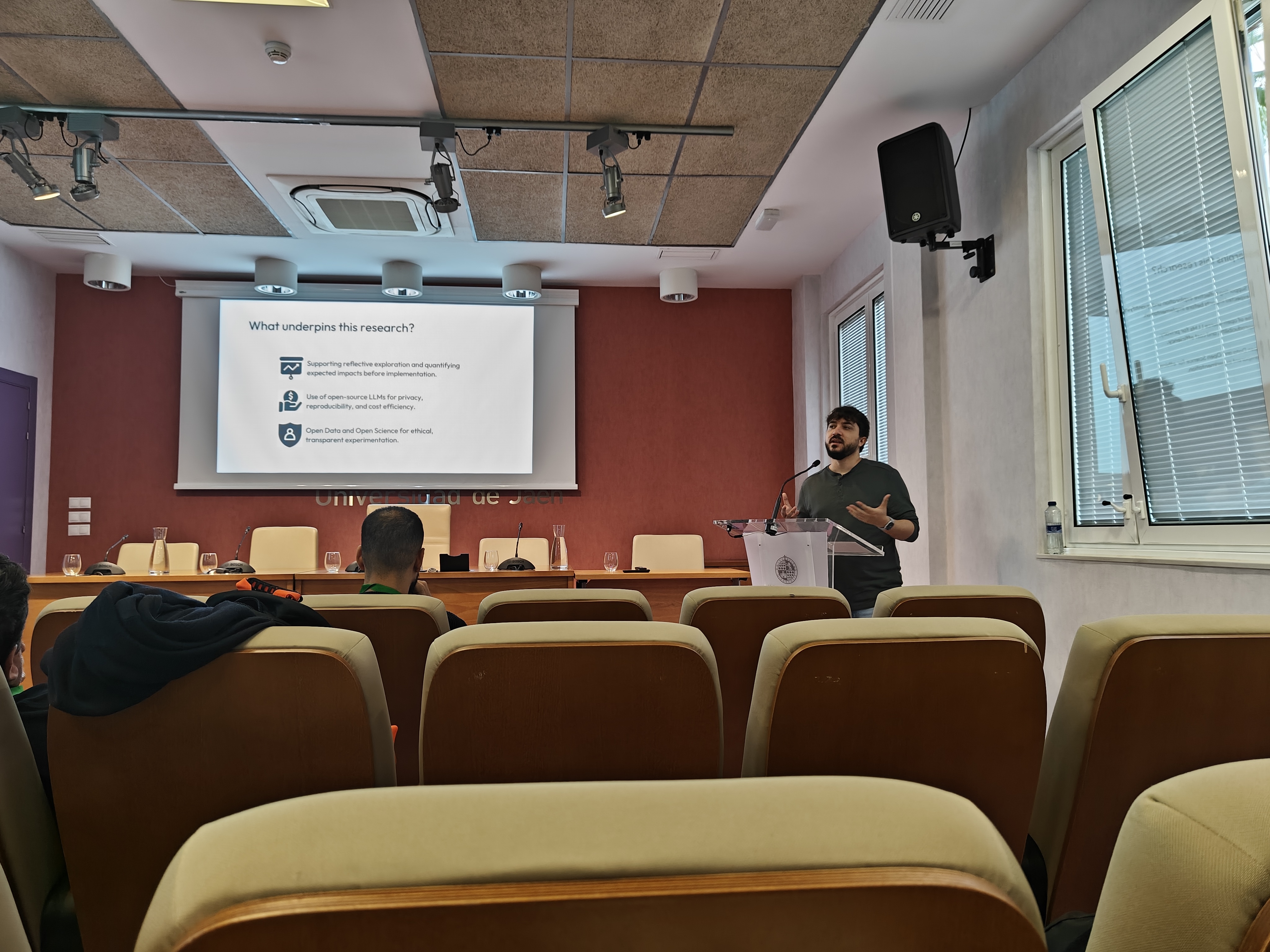
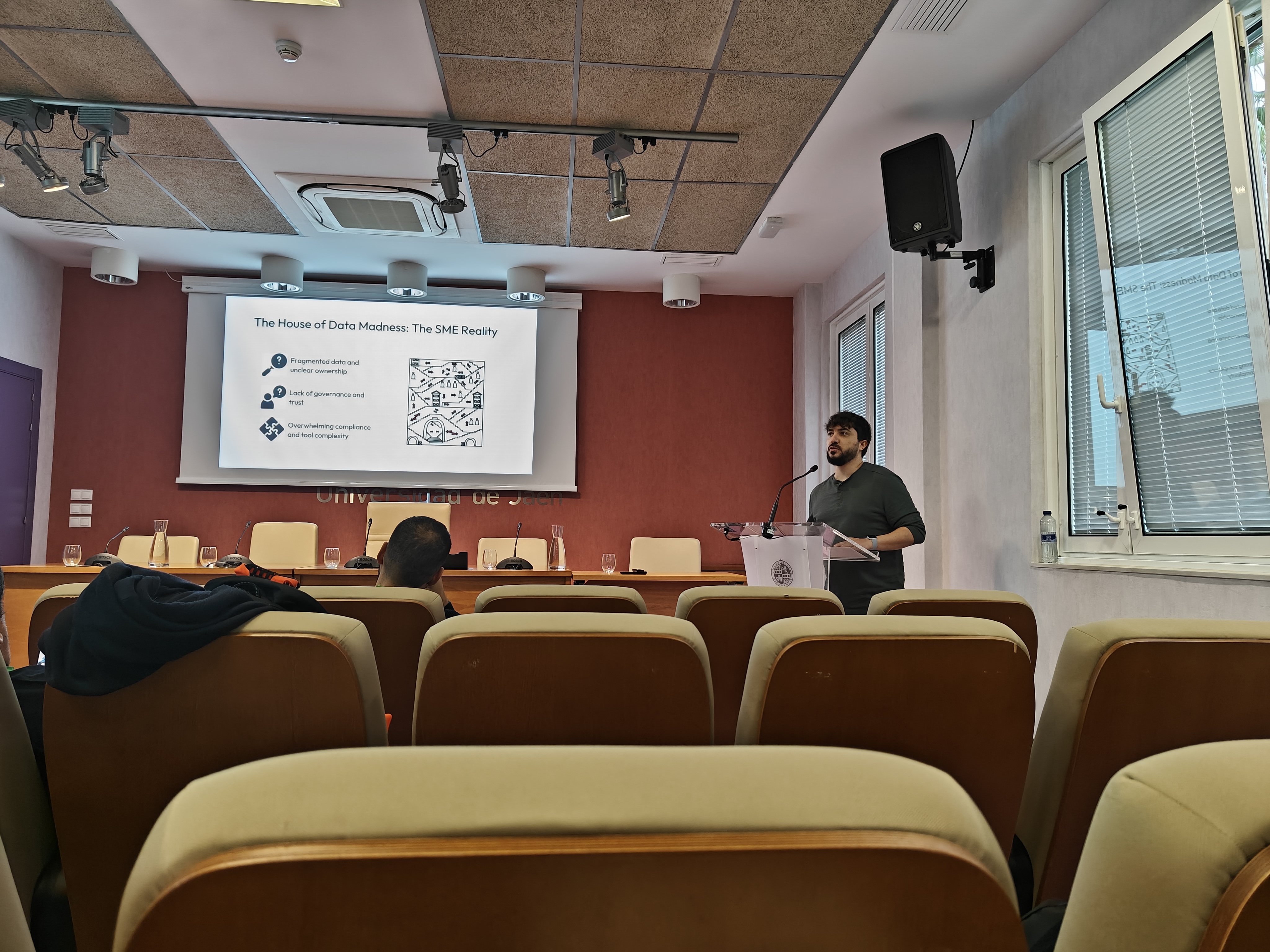
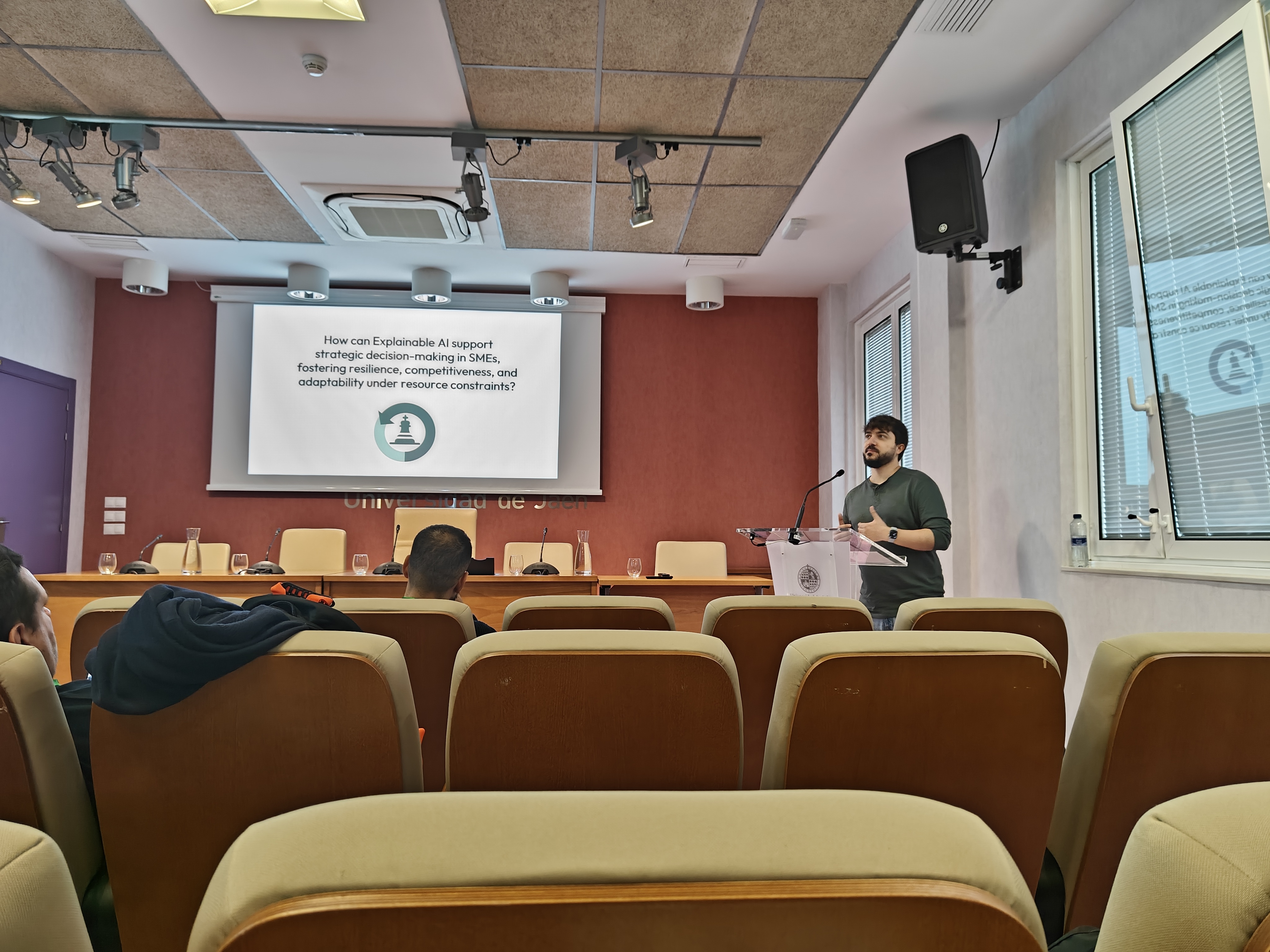
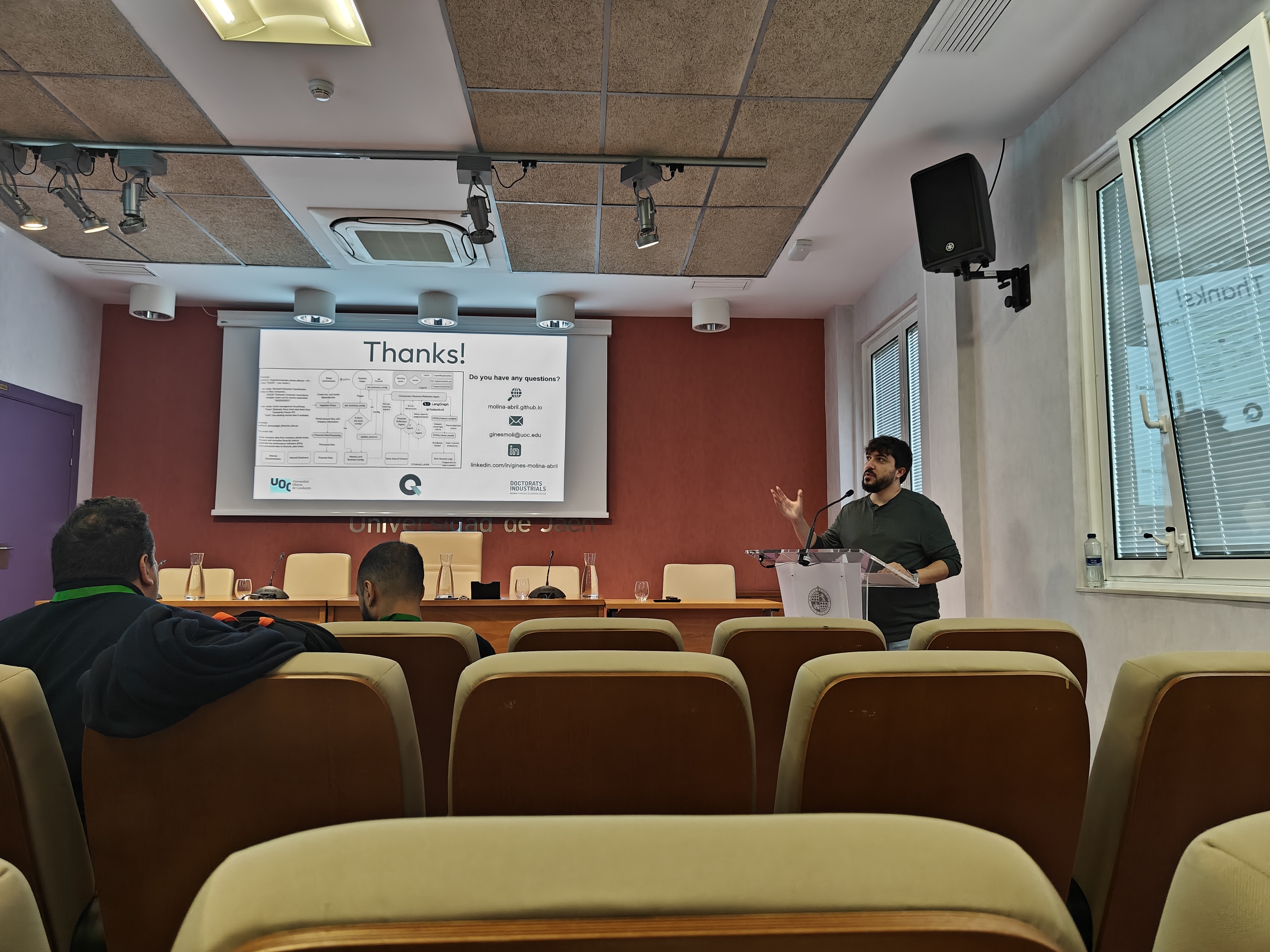
I had the privilege of presenting my research on Evaluative AI frameworks for strategic decision-making in SMEs at IDEAL 2025 in Jaén, one of Europe’s leading conferences on intelligent systems, learning technologies, and AI in practice. The conference brought together academics, industry professionals, and practitioners to discuss innovations in artificial intelligence, machine learning, and decision support systems.
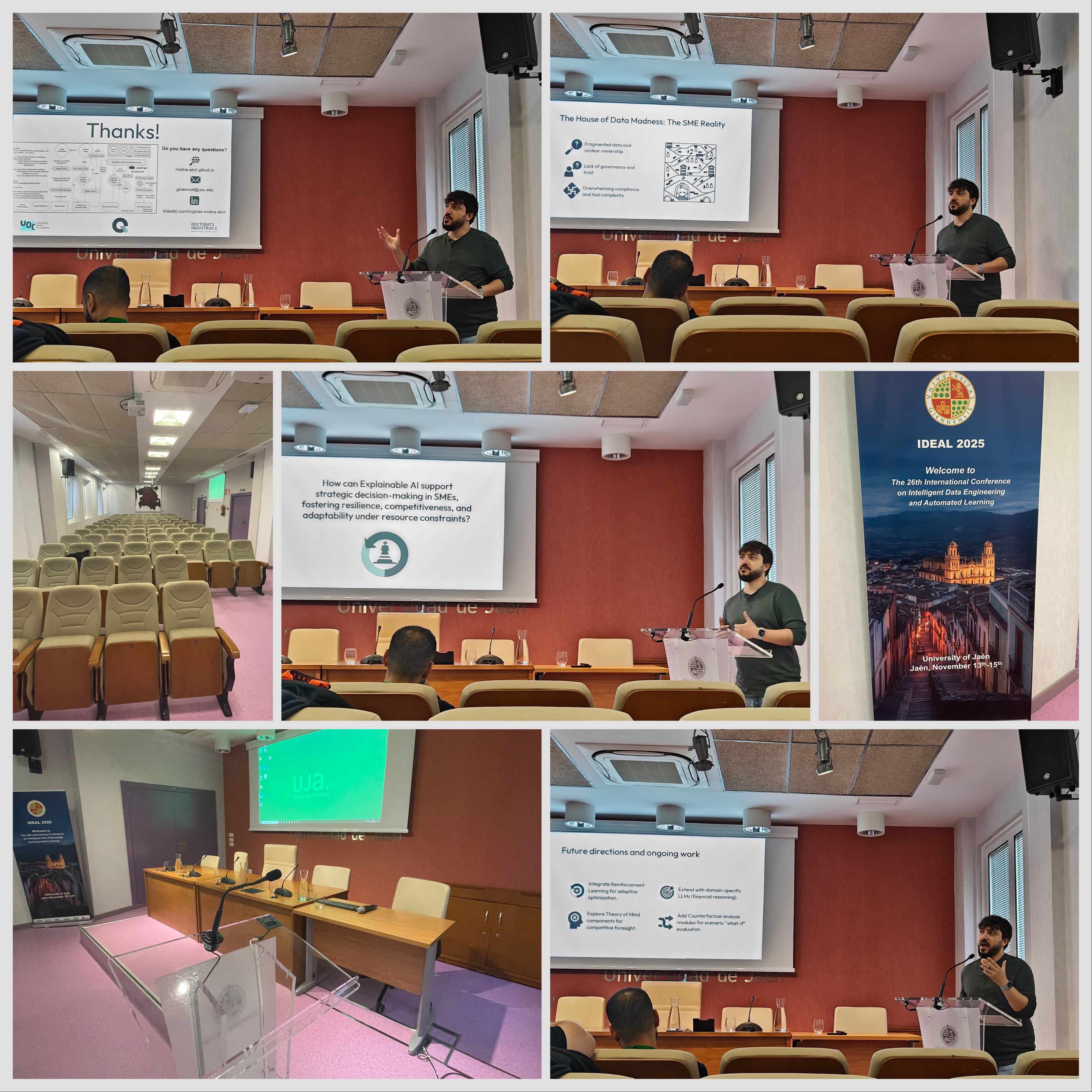
Presentation overview
My presentation introduced an approach based on the Evaluative AI paradigm, where AI goes beyond providing post-decision recommendations to actively assisting humans throughout the entire decision-making process. This represents a fundamental shift in how we think about AI’s role in organizational decision-making, particularly for resource-constrained SMEs.
Rethinking explainability: from post-decision justification to decision support
We often discuss AI “explaining” its decisions—but what if we extended explainability to enable AI to assist us more effectively? Instead of treating explainability as something that comes after a model’s decision, this work explores how humans can use AI to assess evidence and explore strategic hypotheses during the decision-making process itself.
This shift is crucial: rather than building AI systems that make decisions and then explain them, we’re developing AI that helps humans think critically about decisions before they’re made. The goal is decision support that is transparent, context-aware, and preserves human autonomy and responsibility. This represents a move from AI that recommends to AI that encourages critical thinking and evidence-based reasoning.
Key components of the framework
The proposed framework centers on three core components:
Evidence-based co-reasoning: AI supports human decision-makers in systematically evaluating data and evidence, helping to surface insights that might otherwise be overlooked in fast-paced business environments.
Hypothesis testing: AI assists in exploring strategic options through rigorous scenario analysis, enabling SMEs to test assumptions and evaluate alternatives before committing resources.
Context-aware reasoning: The AI provides decision support that deeply considers organizational context, constraints, and strategic objectives, ensuring recommendations are practical and aligned with business realities.
Making advanced AI accessible to SMEs
The ultimate goal of this research is both simple and ambitious: to make responsible, transparent, and participatory decision intelligence feasible for small and medium-sized enterprises without requiring huge budgets or complex technical infrastructures.
SMEs face dynamic and competitive environments where resilience and data-driven decision-making are critical. However, they often struggle to adopt advanced AI and optimization techniques due to high costs, limited training, and restricted access to specialized technical expertise. This framework addresses these barriers by providing practical, implementable approaches tailored to SME constraints.
Research context
This work is part of my Industrial PhD at the Universitat Oberta de Catalunya (UOC) within the Doctorats Industrials program of the Generalitat de Catalunya. The research follows the Design and Creation methodology (Oates, 2006), which emphasizes creating solutions grounded in real-world practice while maintaining strong theoretical foundations. This approach is particularly well-suited for bridging the gap between academic research and industrial application.
The industrial PhD context has been invaluable for this work, as it enables direct engagement with real SME challenges while applying rigorous academic methodologies. Working at the intersection of practice and theory has shaped both the research questions and the proposed solutions to ensure they address genuine business needs.
Conference experience
IDEAL 2025 provided an excellent platform for sharing this research and engaging with the broader intelligent systems community. The conference sessions covered a wide range of topics including machine learning applications, optimization techniques, automated learning systems, and AI ethics—all highly relevant to the challenges of implementing responsible AI in business contexts.
The discussions following my presentation were particularly valuable, with several attendees sharing their own experiences with AI adoption in SMEs and the barriers they’ve encountered. These conversations reinforced both the practical relevance of this research and the need for frameworks that make advanced AI techniques accessible to organizations with limited resources.
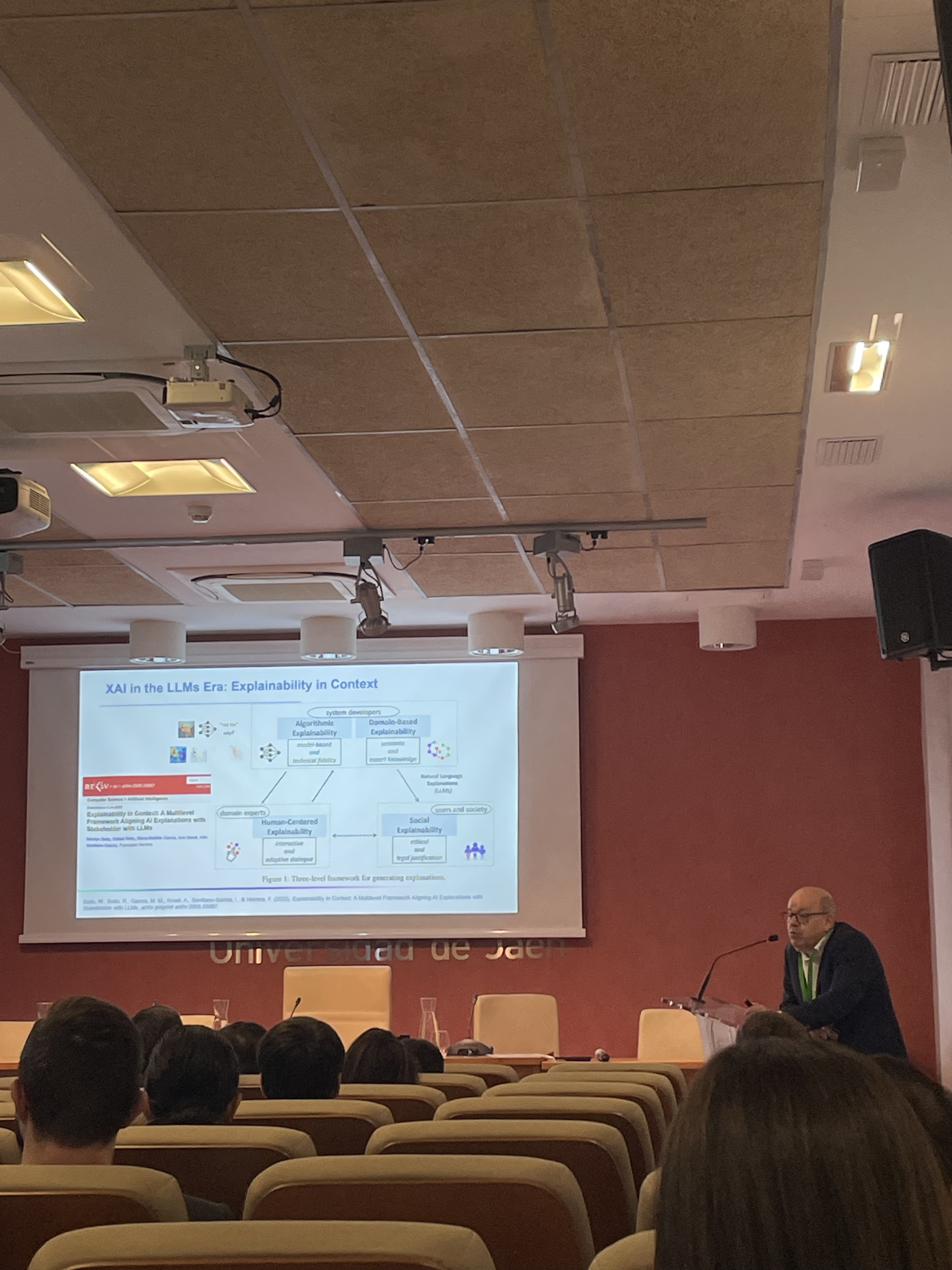
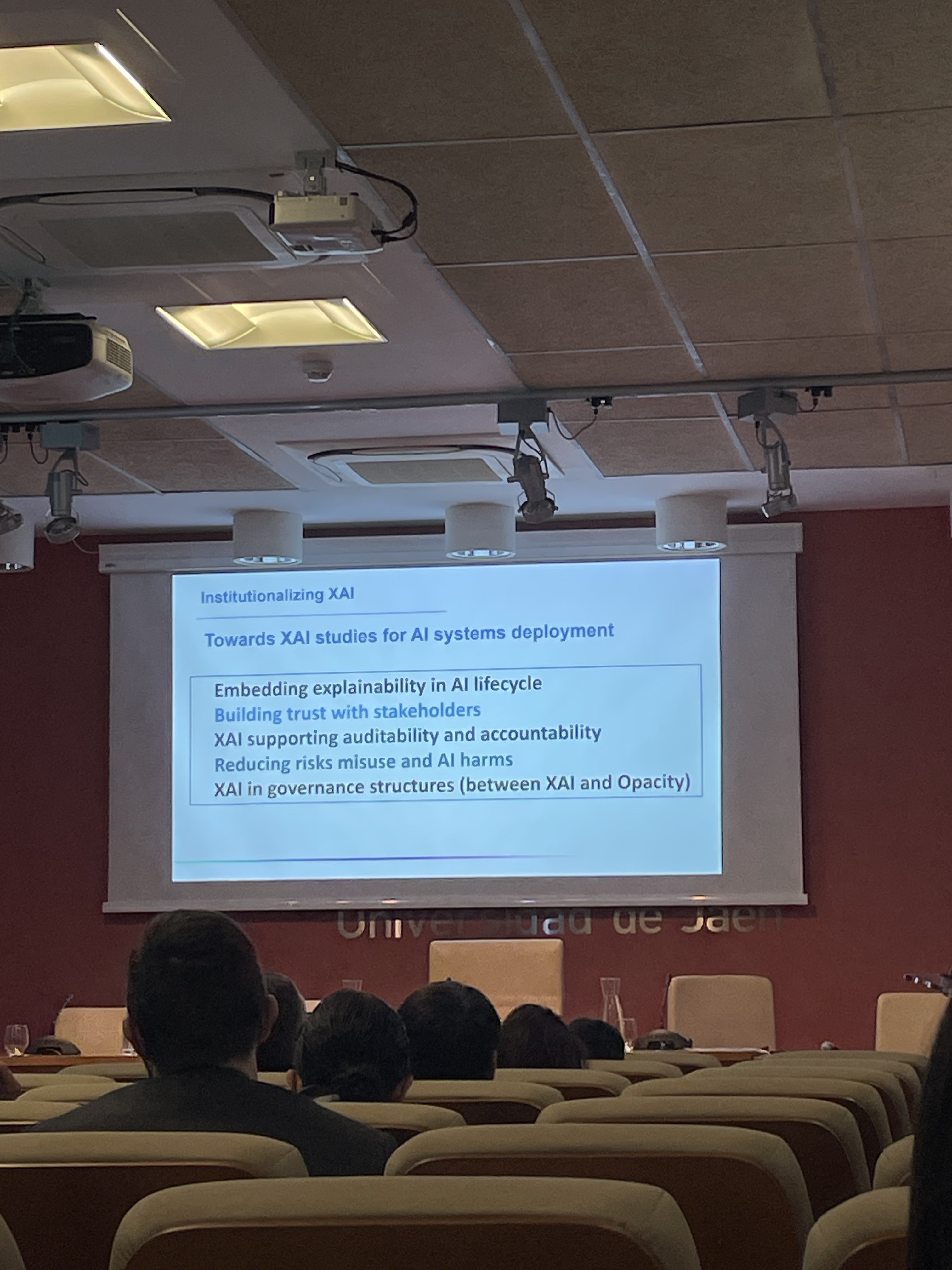
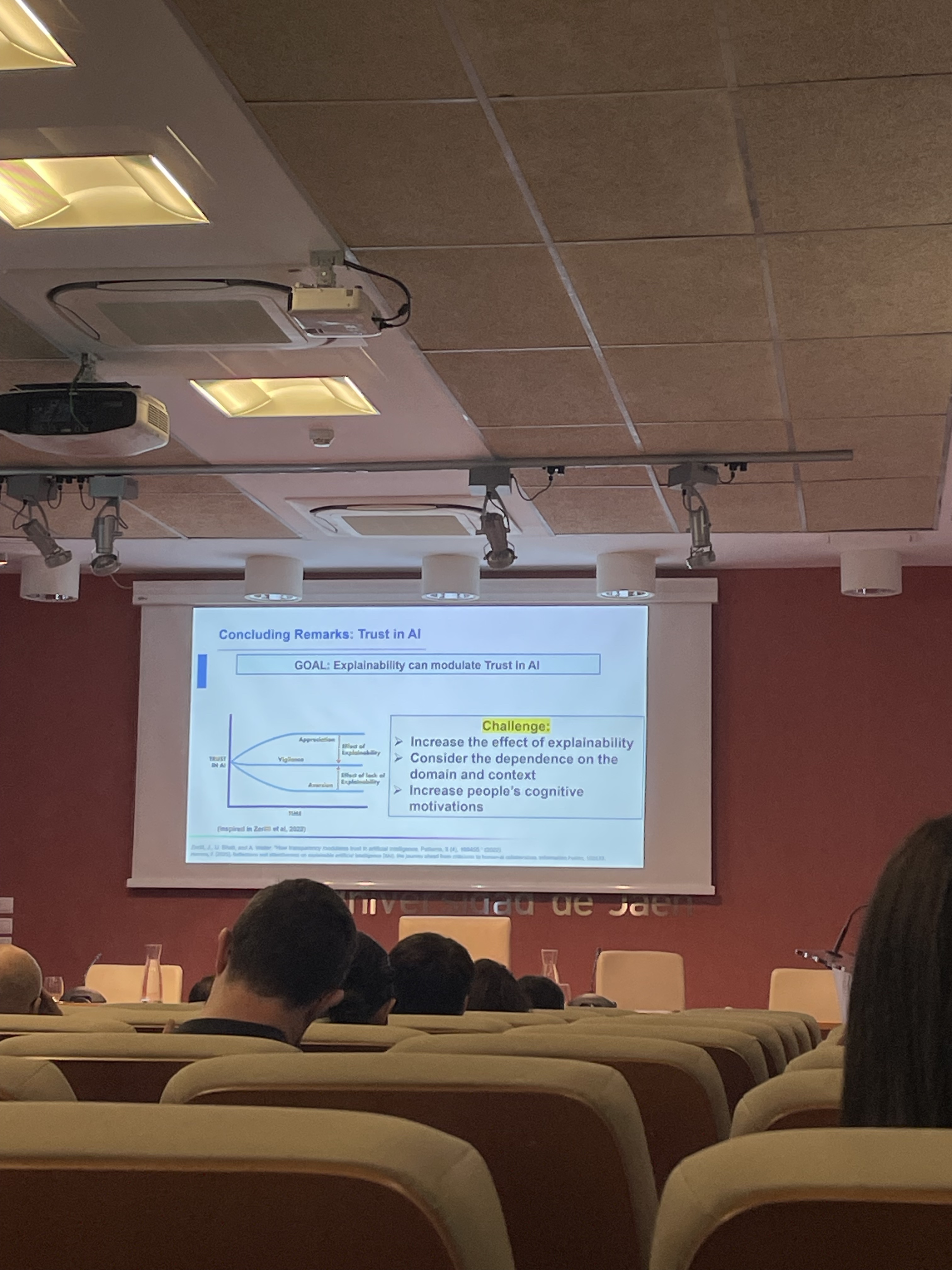
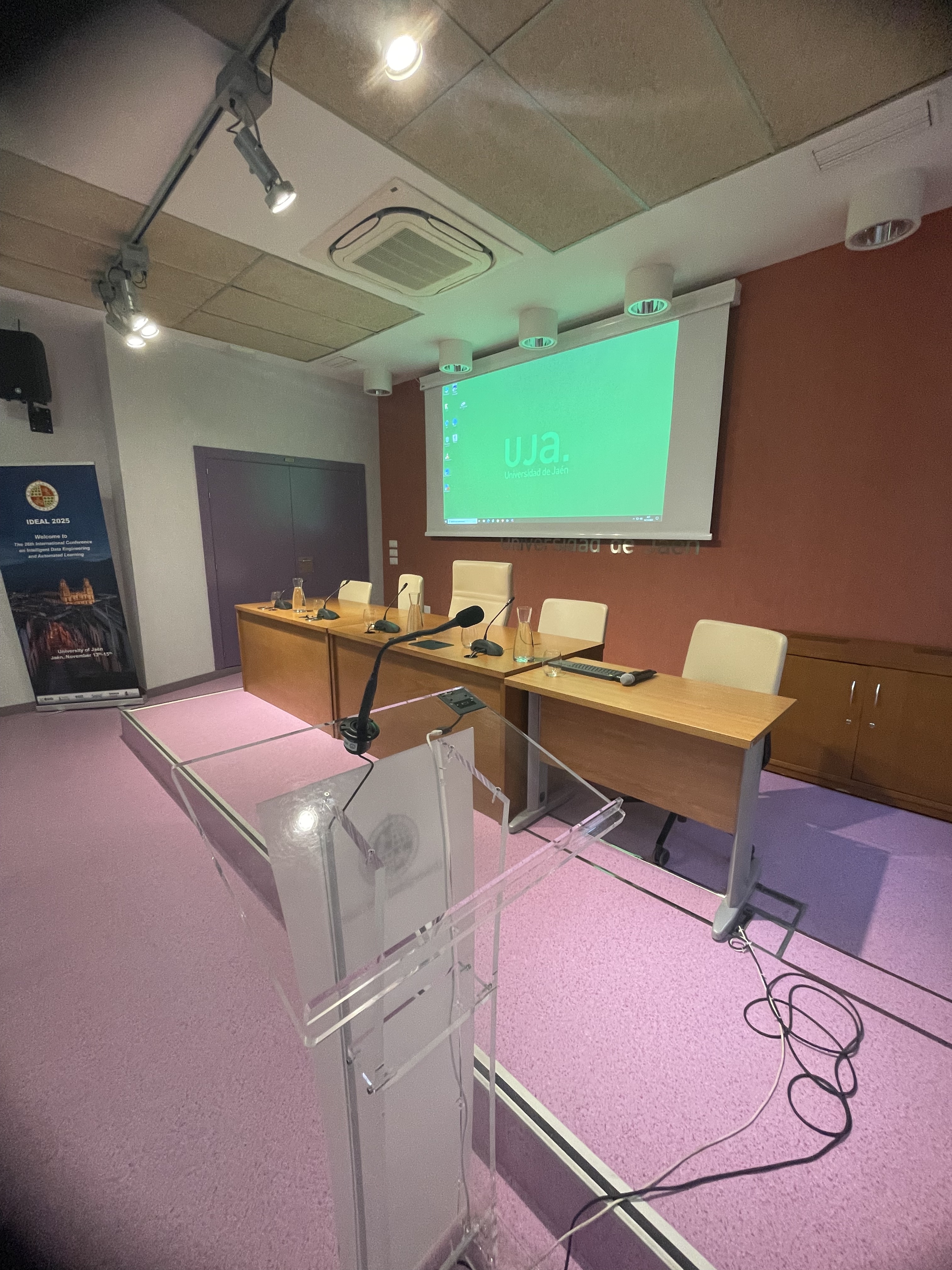
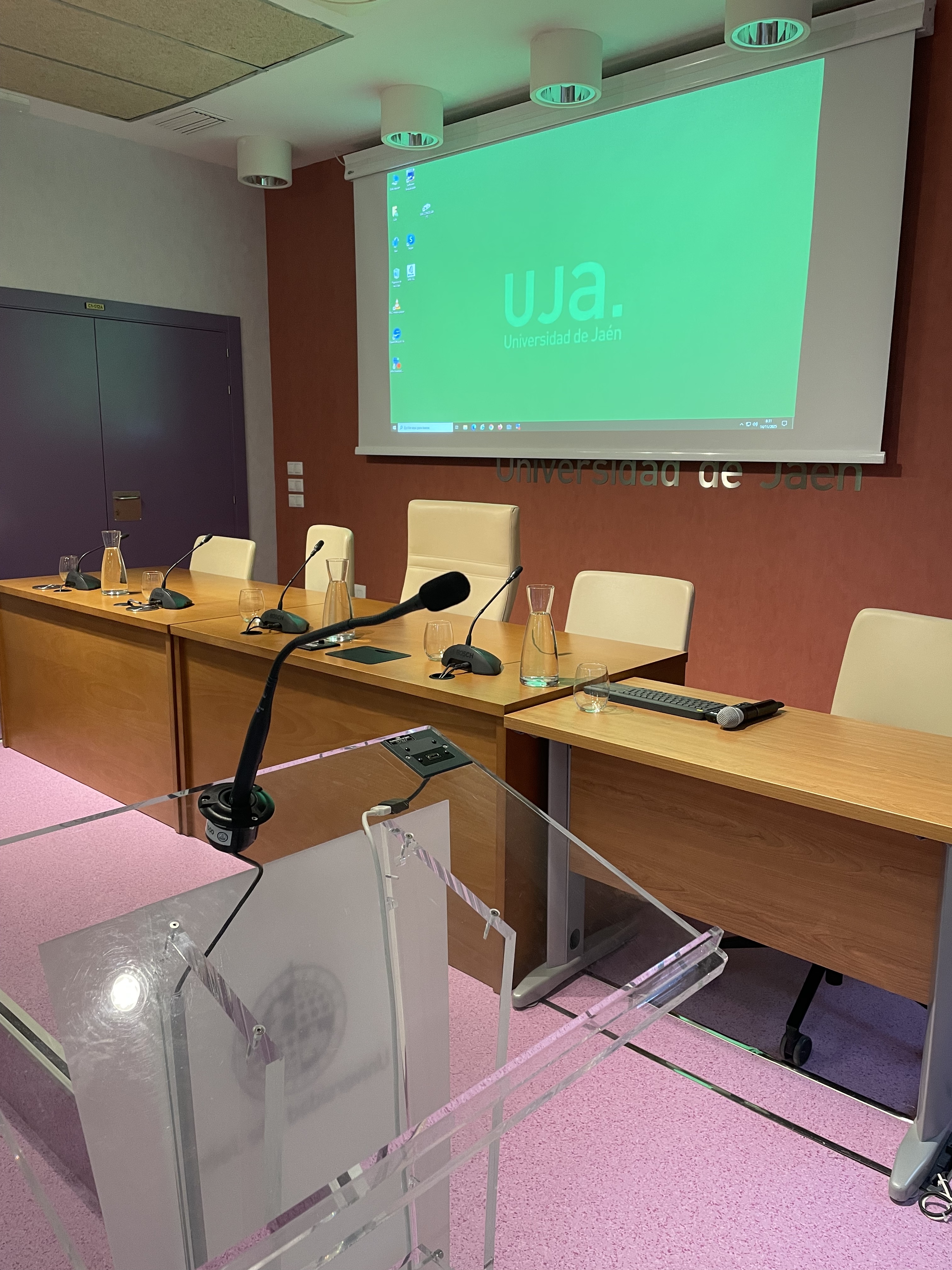
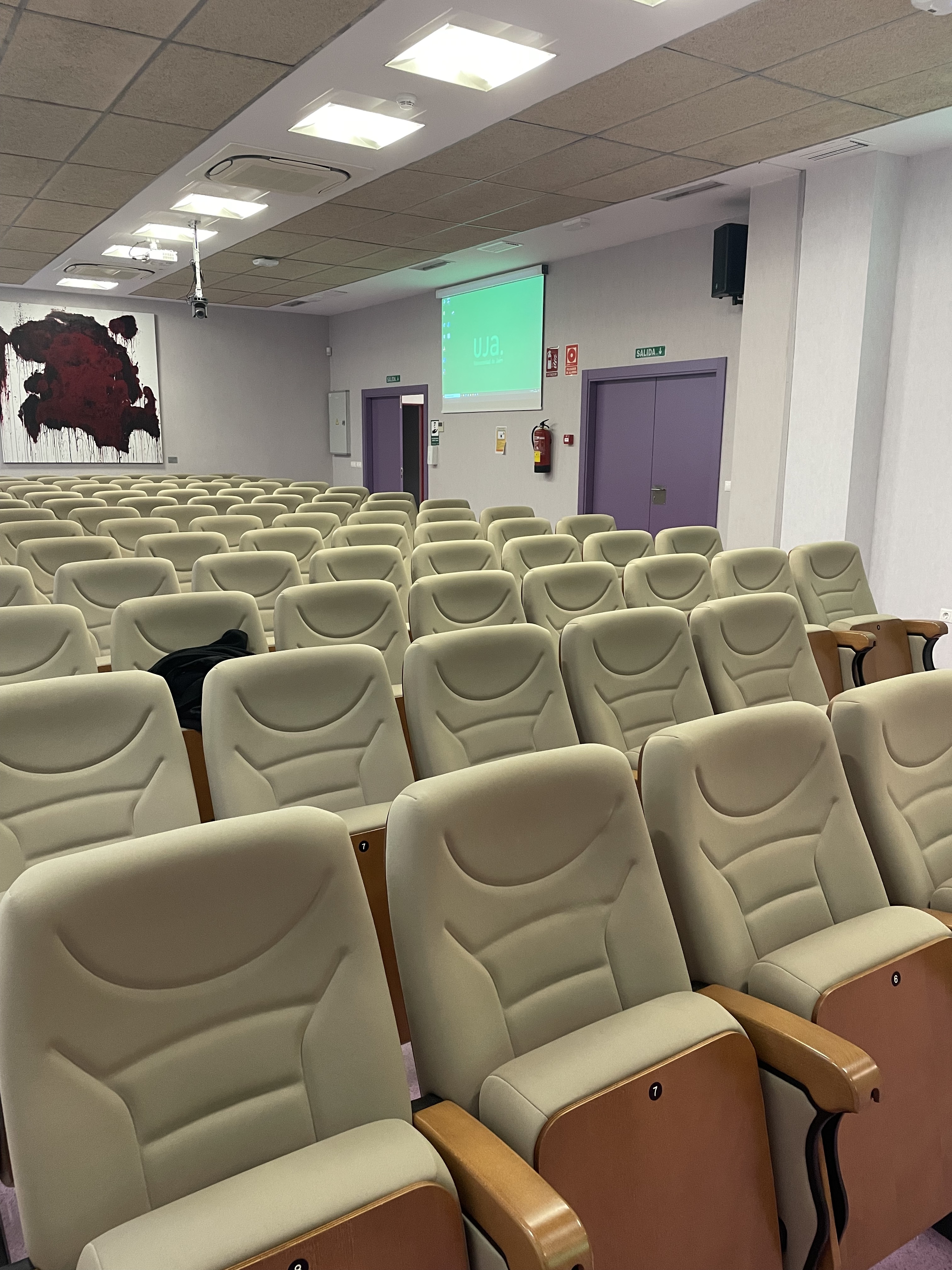
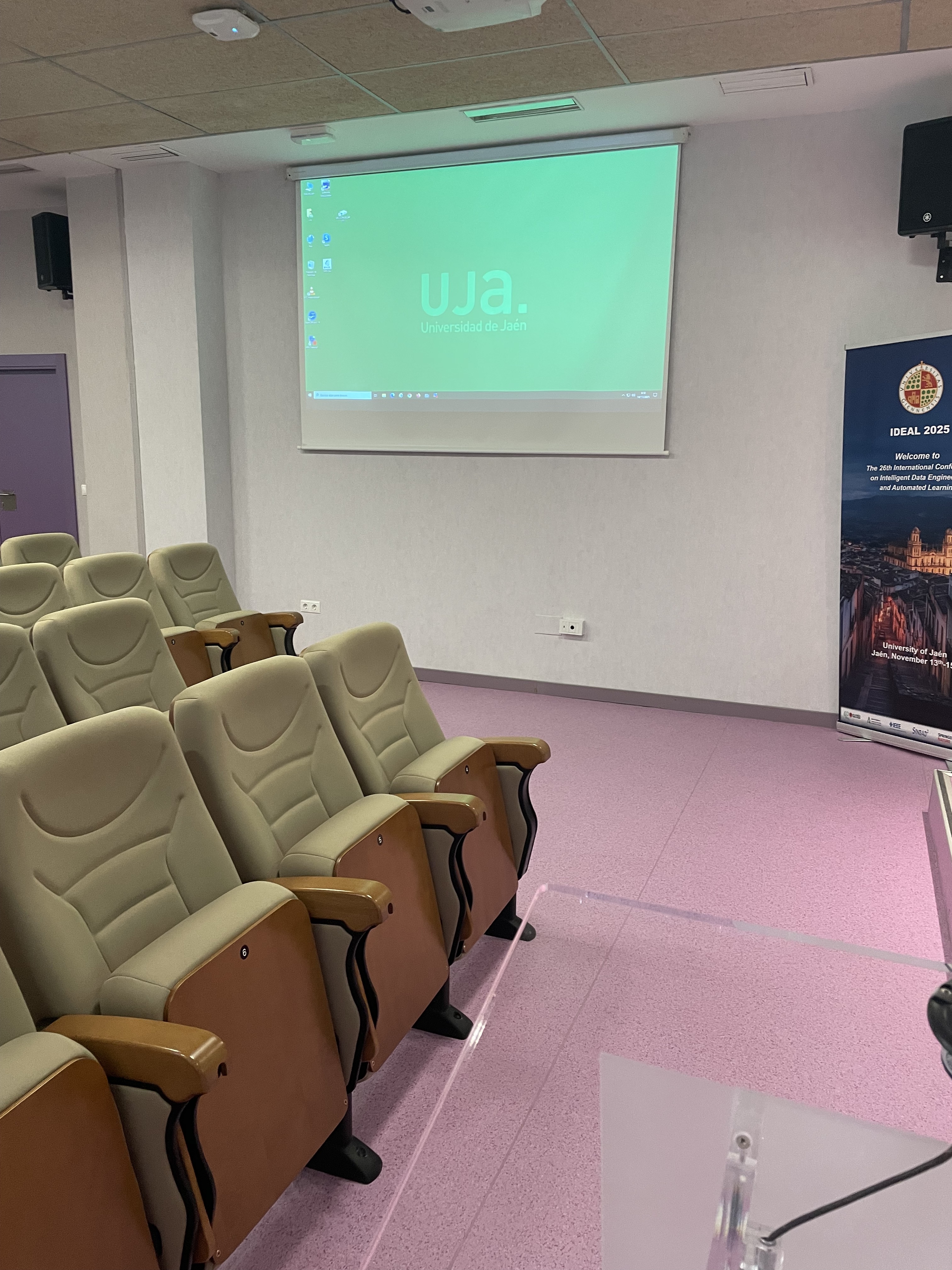
Photo gallery from IDEAL 2025
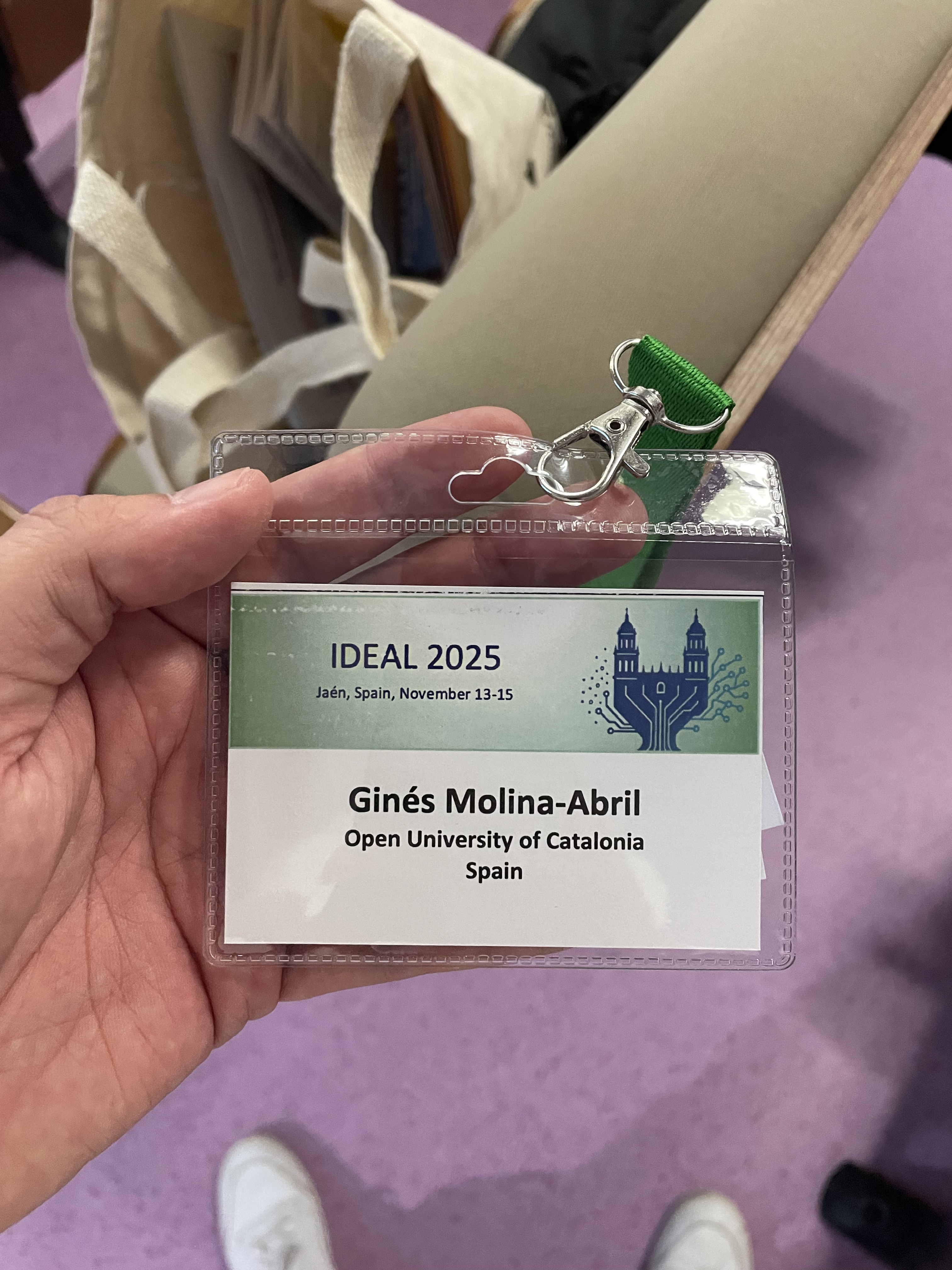
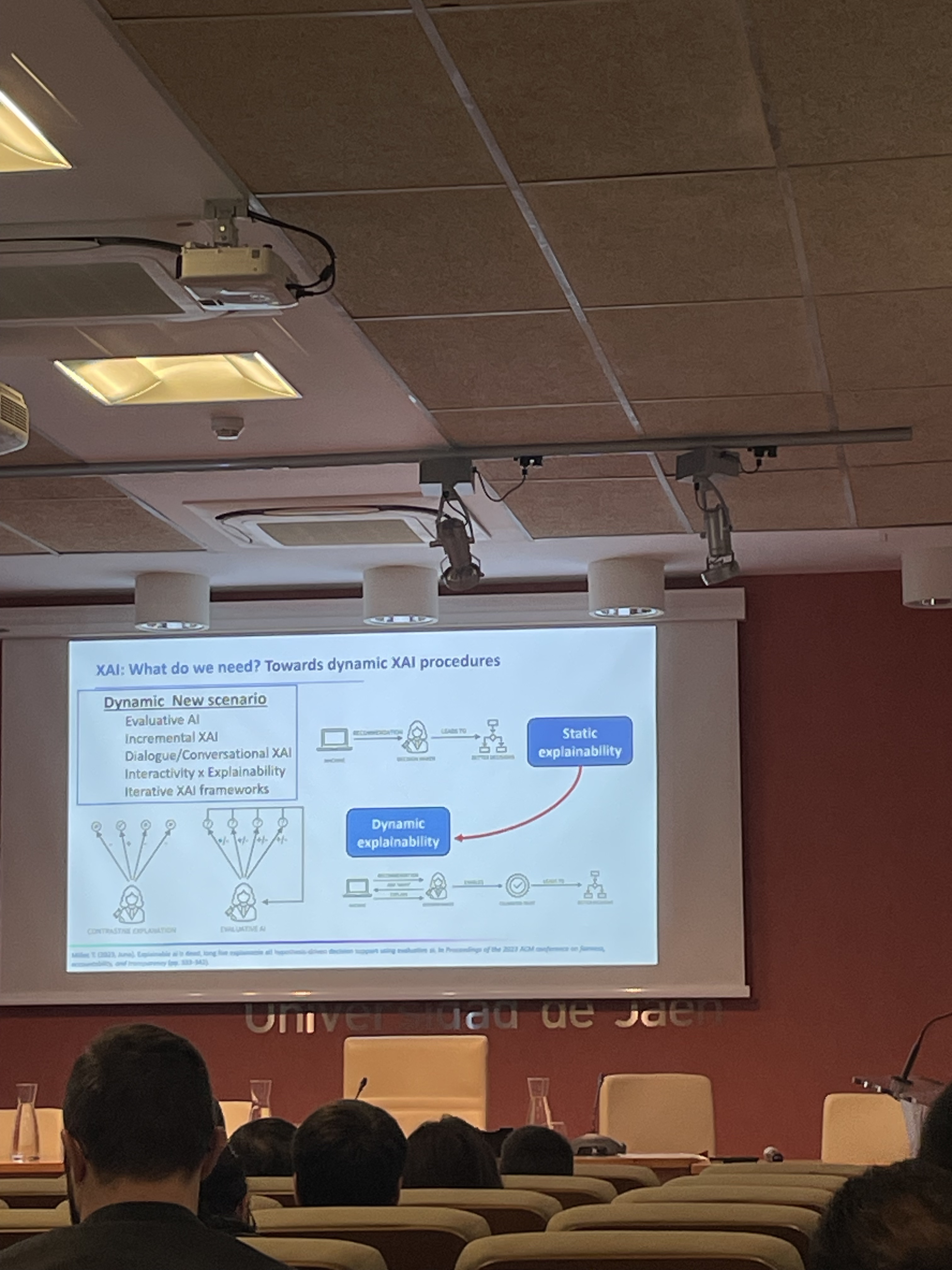
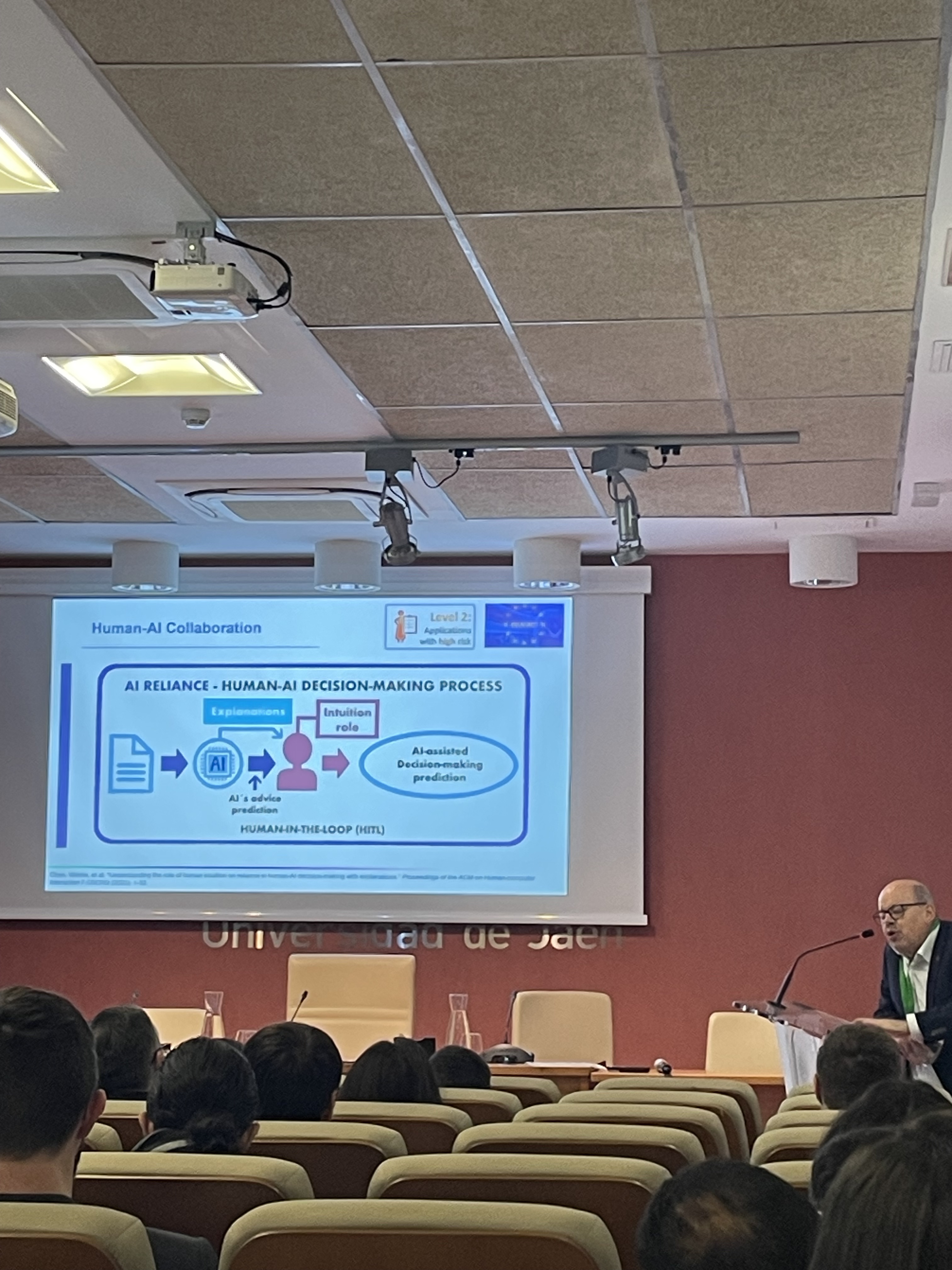
Looking forward
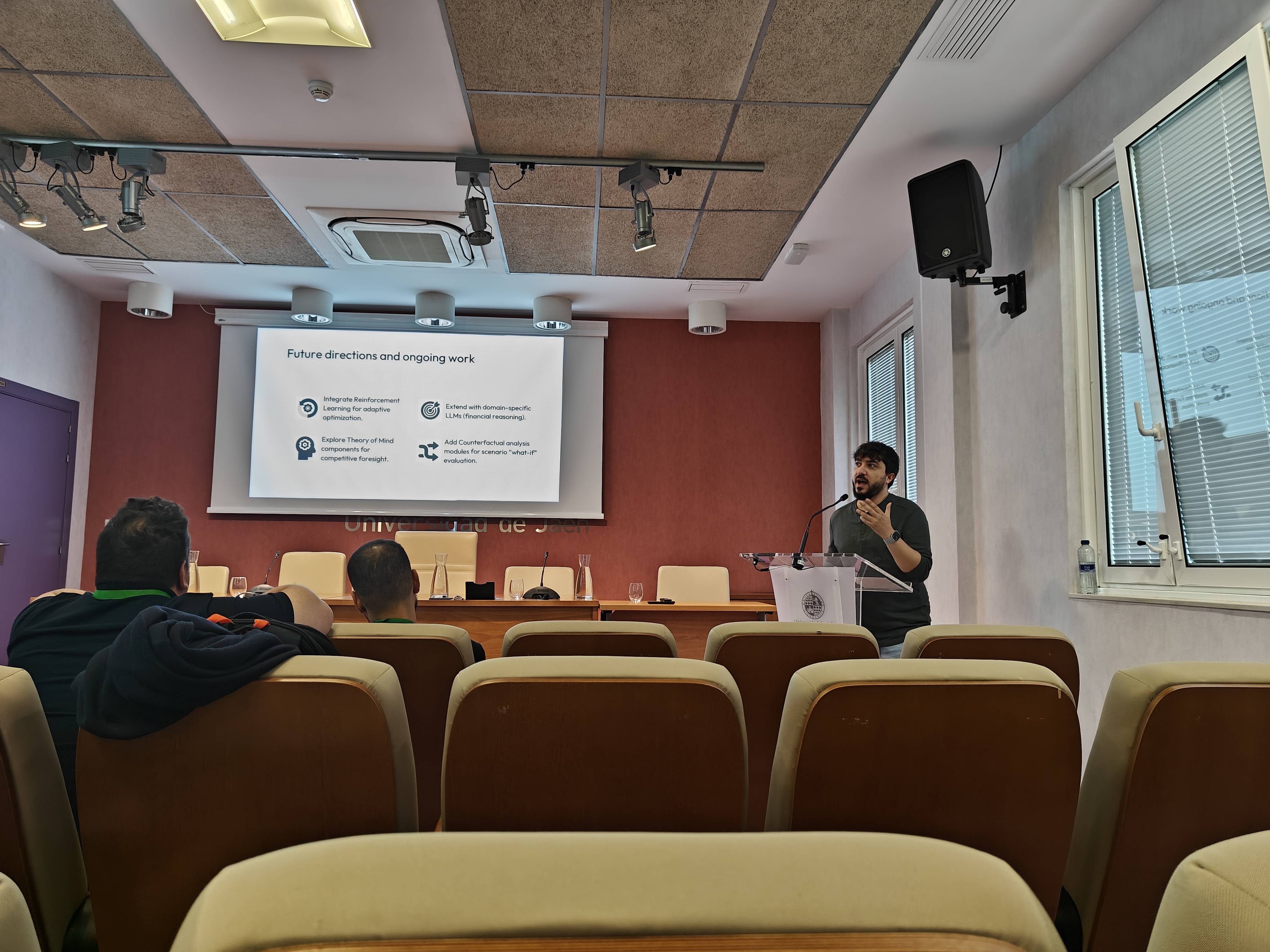
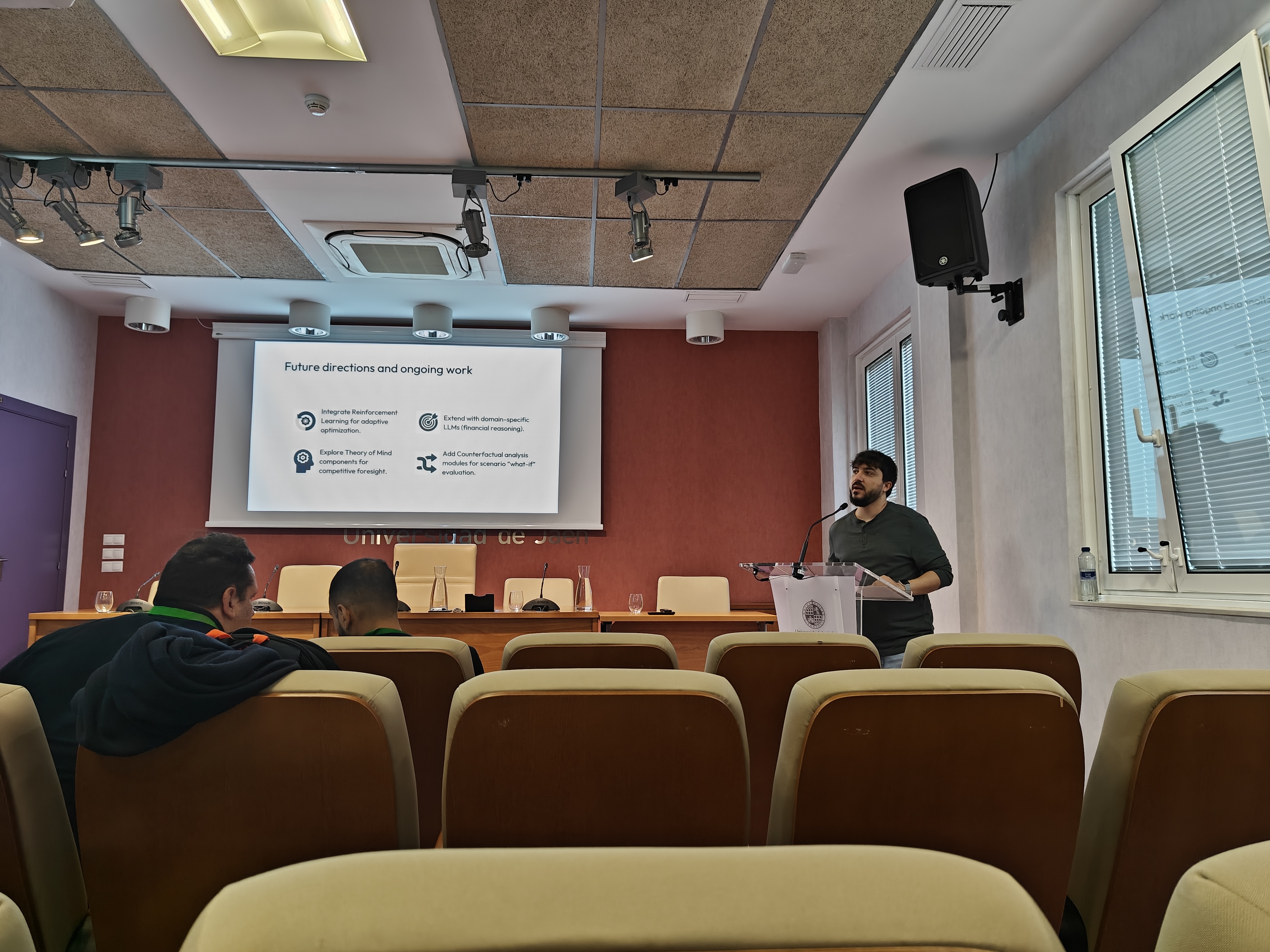
The feedback from IDEAL 2025 has been encouraging and has highlighted several promising directions for future work. Key areas include:
- Further validation of the framework with diverse SME case studies
- Development of practical implementation toolkits
- Exploration of how generative AI and multi-agent architectures can enhance the framework
- Investigation of sustainability and long-term adoption patterns in SME contexts
The conversations at IDEAL have reinforced my conviction that Evaluative AI represents a promising path forward for democratizing advanced decision intelligence, making it accessible to organizations of all sizes.
Related publication: Towards an Evaluative AI Framework for Hypothesis-Driven Strategic Decision-Making in SMEs
Full paper: Available in the IDEAL 2025 proceedings via Springer - Download PDF
Conference: IDEAL 2025 - 26th International Conference on Intelligent Data Engineering and Automated Learning